You are 12 months from launching your 2027 line. The marketing playbook you used for 2024 and 2025 is about to become illegal in your largest export market.
On September 27, 2026, the EU Green Claims Directive takes effect. Generic sustainability claims, the kind that fill most activewear product pages, are now prohibited without recognized certification. If your non-toxic activewear positioning relies on words like "eco-friendly," "green," "sustainable," or "biodegradable" without third-party verification, you face enforcement in the EU and litigation exposure everywhere else.
This is not a compliance exercise. This is a category reset. The brands that move first will own the wellness pivot. The brands that wait will spend 2027 explaining why their marketing copy changed.
What is the wellness pivot in activewear?
Sustainability fatigue is real. According to CNBC reporting on Kering, H&M, and Pandora, most consumers are no longer willing to pay a premium for ethically produced products. Approximately 60 percent of fashion brands' sustainability claims have been identified as unsubstantiated or misleading, according to Columbia SIRI research. Your customer has heard "sustainable" so many times it now means nothing.
The replacement is wellness. Business of Fashion reports that sustainable fashion's new marketing angle is explicitly health-adjacent: skin safety, hormone health, chemical avoidance. This is not a rebrand. It is a category shift from "better for the planet" to "better for your body."
The non-toxic activewear positioning works because it is specific and verifiable. Your customer can understand "PFAS-free" and "BPA-free" without a sustainability glossary. She cannot understand "eco-friendly" because it means nothing.
"Continuous exposure to greenwashing practices has created feelings of frustration and exhaustion among consumers." MDPI Consumer Awareness study
The brands winning in 2026 are those making specific, testable claims about what their fabrics do not contain, not aspirational claims about what their brand believes.
What does the EU green claims ban actually prohibit?
The EU consumer protection directive on green claims bans the following claims in consumer-facing marketing unless you can demonstrate recognized excellent environmental performance:
- "Eco-friendly"
- "Green"
- "Sustainable"
- "Biodegradable"
- "Climate neutral" or "carbon neutral" based on purchased offsets
- Self-made sustainability badges
Enforcement begins September 27, 2026. Claims must be demonstrated through compliance with EU Ecolabel Regulation, a comparable national or regional environmental labelling scheme officially recognised under Member State law, or top-tier performance in the relevant environmental aspect.
This is not guidance. This is law. If your product page says "sustainable" without recognized certification, you are non-compliant in the EU starting this fall.
What will your customer ask in 2027?
Your customer is already asking. Grist reports that "polyester" has become Gen Z slang for anything cheap or fake. The nss magazine coverage of the polyester backlash notes that TikTok and Instagram users are claiming synthetic clothing affects skin health and hormone levels.
The questions your customer service team will field in 2027:
- Does this contain PFAS?
- Is this BPA-free?
- What chemicals are in the dye?
- Do you have third-party test results?
- What certification do you have?
If you cannot answer with a URL to a test report or a certificate number, you lose the sale. The wellness-conscious customer does not want your marketing copy. She wants your lab results.
Girlfriend Collective addresses this directly by stating that the post-consumer plastic they use is polyethylene terephthalate (PET), which does not contain BPA or BPS. That is the level of specificity that wins in 2027.
What does verification cost for a small activewear brand?
Here is the cost math. Assume you are a DTC brand with 15 SKUs, $2 million annual revenue, and $11 average COGS.
Annual certification costs:
| Certification | Annual fee | Unit cost impact | |---|---|---| | OEKO-TEX Standard 100 | $500-$2,000 per product class | +5-8% | | GOTS (organic) | $1,200-$3,000 per facility | +20-50% fabric cost | | bluesign | $2,000-$5,000 per facility | +3-7% |
Per Alibaba seller data, testing costs run $250-$700 per test batch. Compliance testing represents 2-5% of FOB value for typical apparel orders.
For a brand running 15 SKUs with OEKO-TEX certification:
- Annual certification: $1,500-$4,000
- Testing per batch: $500-$1,400
- Unit cost increase: approximately $0.55-$0.88 per unit (5-8% of $11 COGS)
If your ASP is $85 and your current gross margin is 59%, your new gross margin after certification costs is approximately 57-58%. The margin compression is real but manageable. The alternative, losing sales to brands that can answer certification questions, costs more.
Where is the regulatory floor moving?
The EU is first but not alone. Here is the 24-month regulatory calendar affecting non-toxic activewear positioning:
September 27, 2026: EU green claims ban takes effect. Generic sustainability claims prohibited without recognized certification.
October 10, 2026: REACH Annex XVII Entry 79 caps PFHxA in textiles at 25 ppb.
January 1, 2027: California AB-1817 threshold drops from 100 ppm to 50 ppm total organic fluorine. New Hampshire, Washington, and Colorado PFAS bans expand to include apparel.
July 1, 2027: Vermont tightens TOF threshold from 100 ppm to 50 ppm.
January 1, 2028: New York restricts outdoor apparel for severe wet conditions.
2030: France extends PFAS ban to all textiles.
The regulatory floor is rising faster than most supply chains can adapt. If your supplier cannot provide third-party test results for PFAS content today, you will not be compliant in 13 months.
What does this mean for investor due diligence?
If you are building toward an exit, your material story is now a valuation input. Per Eightx analysis of apparel brand multiples, scaled profitable brands trade at 8x to 11x EV/EBITDA in 2026. Premium brands cluster near 11x.
What separates the 8x from the 11x is increasingly the answer to this question: can you prove your marketing claims?
Columbia SIRI research notes that greenwashing no longer works in investor conversations. Apparel VCs demand proof of impact through measurable metrics, not marketing claims. The due diligence checklist now includes:
- Certifications held and their coverage
- Percentage of verified sustainable materials
- Actual supply chain visibility
- Test reports for chemical claims
A brand claiming "non-toxic" on its product page without OEKO-TEX or equivalent certification is a diligence red flag. The acquirer will assume the claim is unsubstantiated and discount accordingly.
What should you do this quarter?
1. Audit your current claims. Pull every product page, every hangtag, every social post. Flag any use of "eco-friendly," "green," "sustainable," "biodegradable," "climate neutral," or "carbon neutral." These are banned in the EU starting September 27 unless you have recognized certification.
2. Request third-party test results from your suppliers. Ask specifically for PFAS content (total organic fluorine), heavy metals, formaldehyde, and any other chemical claims you are making. If your supplier cannot provide results, you cannot make the claim.
3. Get OEKO-TEX quotes. For most activewear brands, OEKO-TEX Standard 100 is the fastest path to a defensible "tested for harmful substances" claim. Contact the OEKO-TEX certification body for your region.
4. Update your 2027 line briefing. Your design and merchandising teams need to know that every material choice now carries a compliance cost. Build testing and certification into your development calendar, not as an afterthought before launch.
What should you do in the next 12 months?
1. Shift your positioning from "sustainable" to specific. Replace generic claims with testable ones: "OEKO-TEX certified," "PFAS-free per third-party testing," "BPA-free." Your customer understands these. Your legal team can defend them.
2. Build a test-results library. Create a URL structure where customers can access test reports by SKU. This is the wellness-pivot version of radical transparency and it converts. Brands like Girlfriend Collective are already doing this.
3. Renegotiate supplier contracts. Your supplier should be providing test results as standard, not as an upcharge. If they resist, they are not set up for where the market is going. Our guide on the plastic-free activewear guide covers what to ask for in a supplier conversation.
4. Price the certification into your 2027 margins. If your gross margin cannot absorb a 2-3% compression for compliance, you need to raise prices or find lower-cost certified suppliers. The brands that absorb this cost now will own the category in 2028.
OHZEHN-TEX(TM) builds verification into the fabric itself. Every lot is tested. Every claim is documented. If you are building a non-toxic activewear line for 2027, the cost of third-party certification is already in your landed cost.
"Fashion brands marketing their circular credentials effectively in 2026 are those that can demonstrate the actual environmental impact with specific data rather than making aspirational claims without evidence." Heuritech fashion industry analysis
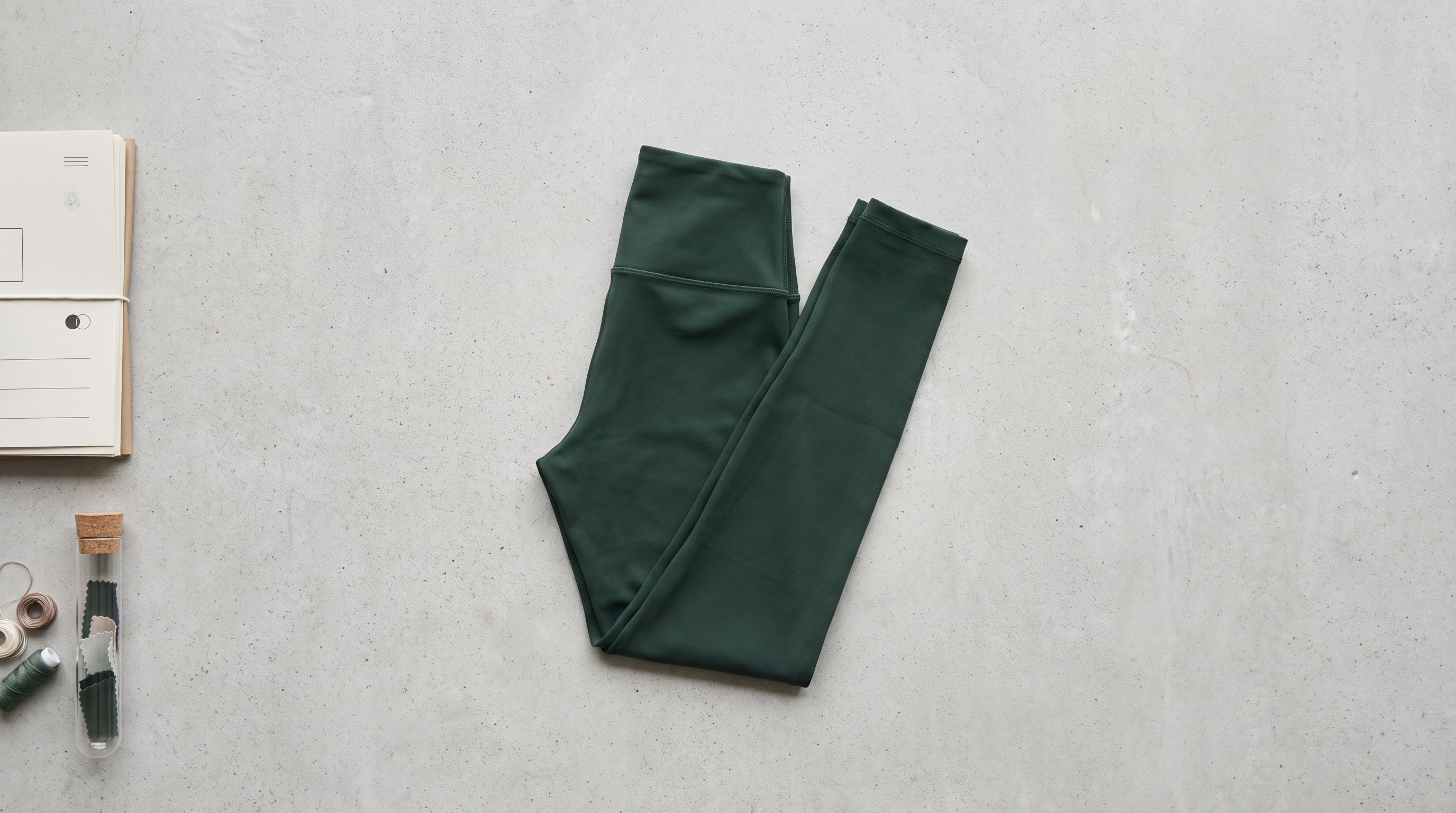
The wellness pivot is not a marketing strategy. It is a compliance requirement dressed in consumer language. Your customer wants to know what is not in her leggings. The EU is about to make that question a legal obligation. The brands that answer it first will own the category.
The regulatory floor moved. Your positioning needs to move with it.
Sources
https://www.cnbc.com/2026/05/20/fashion-sustainability-shoppers-circularity-pandora-kering-gucci.html https://siri.sipa.columbia.edu/news/threading-path-transparency-sustainability-reporting-apparel-industry https://www.businessoffashion.com/articles/sustainability/sustainable-fashions-new-marketing-angle-is-wellness/ https://www.mdpi.com/2071-1050/17/7/2982 https://www.carbonfact.com/blog/policy/empco-fashion https://www.westwoodsourcing.com/blog/services-14/eu-green-claims-ban-27-september-2026-184 https://grist.org/culture/gen-z-is-using-polyester-as-an-insult-its-actually-a-throwback/ https://www.nssmag.com/en/fashion/45278/in-2026-polyester-has-become-a-dirty-word https://girlfriend.com/pages/about-us https://seller.alibaba.com/blogs/2026/southeast-asia/apparel-accessories/oeko-tex-gots-certification-guide-alibaba-b2b-export https://sustainabilityservices.eurofins.com/news/pfas-regulations-overview-2026-for-consumer-products/ https://www.bluesign.com/pfas-in-clothing https://eightx.co/blog/apparel-brand-multiples-2026 https://www.oeko-tex.com/en/our-standards/oeko-tex-standard-100/ https://heuritech.com/articles/fashion-industry-challenges/ https://ohzehn-tex.com/plastic-free-activewear/