What did Lululemon promise with Be Planet?
In October 2020, Lululemon launched its Be Planet marketing campaign with three headline commitments. The company pledged that 100% of products would be made with sustainable materials by 2030. It set an interim target of at least 75% of products containing sustainable materials by 2025. And it committed to a 60% reduction in carbon emissions per unit of value added by 2030.
The campaign language positioned environmental stewardship as central to the brand. According to the Truth in Advertising analysis, Lululemon's marketing stated that its "products and actions avoid environmental harm and contribute to restoring a healthy planet."
The premise was clear: buying Lululemon meant participating in measurable environmental progress.
What do the emissions numbers actually show?
Lululemon's own impact reporting tells a different story. According to data cited in the Stand.earth complaint, the company's Scope 3 greenhouse gas emissions increased from approximately 471,100 tonnes in 2020 to 847,400 tonnes in 2022.
CBC News reporting cites slightly different figures from Lululemon's corporate disclosures: Scope 3 emissions rose from 829,456 tCO2e in 2020 to 1,691,009 tCO2e in 2022. Either way, the trajectory is the same. Emissions roughly doubled during the first two years of the Be Planet campaign.
Scope 3 emissions cover indirect emissions across the value chain, including purchased goods, manufacturing, transportation, and end-of-life treatment of products. For an apparel company, this is where the bulk of emissions occur.
Trellis reported that Lululemon acknowledged this trajectory in its own sustainability reporting, writing that progress on reducing supply chain emissions "needs acceleration."
"While Lululemon claims that it is converting to recycled polyester and nylon in its products, experts do not consider these products to be a truly sustainable alternative as they are energy intensive to manufacture, do not biodegrade and still release microplastics." , Kelley Drye analysis of the Gyani v. Lululemon class action complaint
What does Canada's Competition Bureau investigation cover?
In May 2024, Canada's Competition Bureau opened a formal investigation into Lululemon's sustainability marketing. The investigation stems from a complaint filed by climate advocacy group Stand.earth in February 2024.
According to BNN Bloomberg, the complaint alleges that Lululemon's Be Planet marketing overstates the company's climate action while absolute emissions continued to rise. The Bureau is examining whether the marketing constitutes deceptive practices under Canada's Competition Act.
Forbes reported on the potential consequences. If the Bureau finds that Lululemon made materially false and misleading representations, the company could face penalties of up to 3% of gross global profits for each year the greenwashing occurred. According to the Peters & Peters analysis, this could amount to $400 million USD or more.
The investigation also expanded internationally. In July 2024, Stand.earth filed a parallel complaint with the French General Directorate for Competition, Consumer Affairs and Fraud Control, according to ESG Dive.
No conclusion of wrongdoing has been reached in any jurisdiction. But the investigation is ongoing.
What do Lululemon's product pages actually list for fiber content?
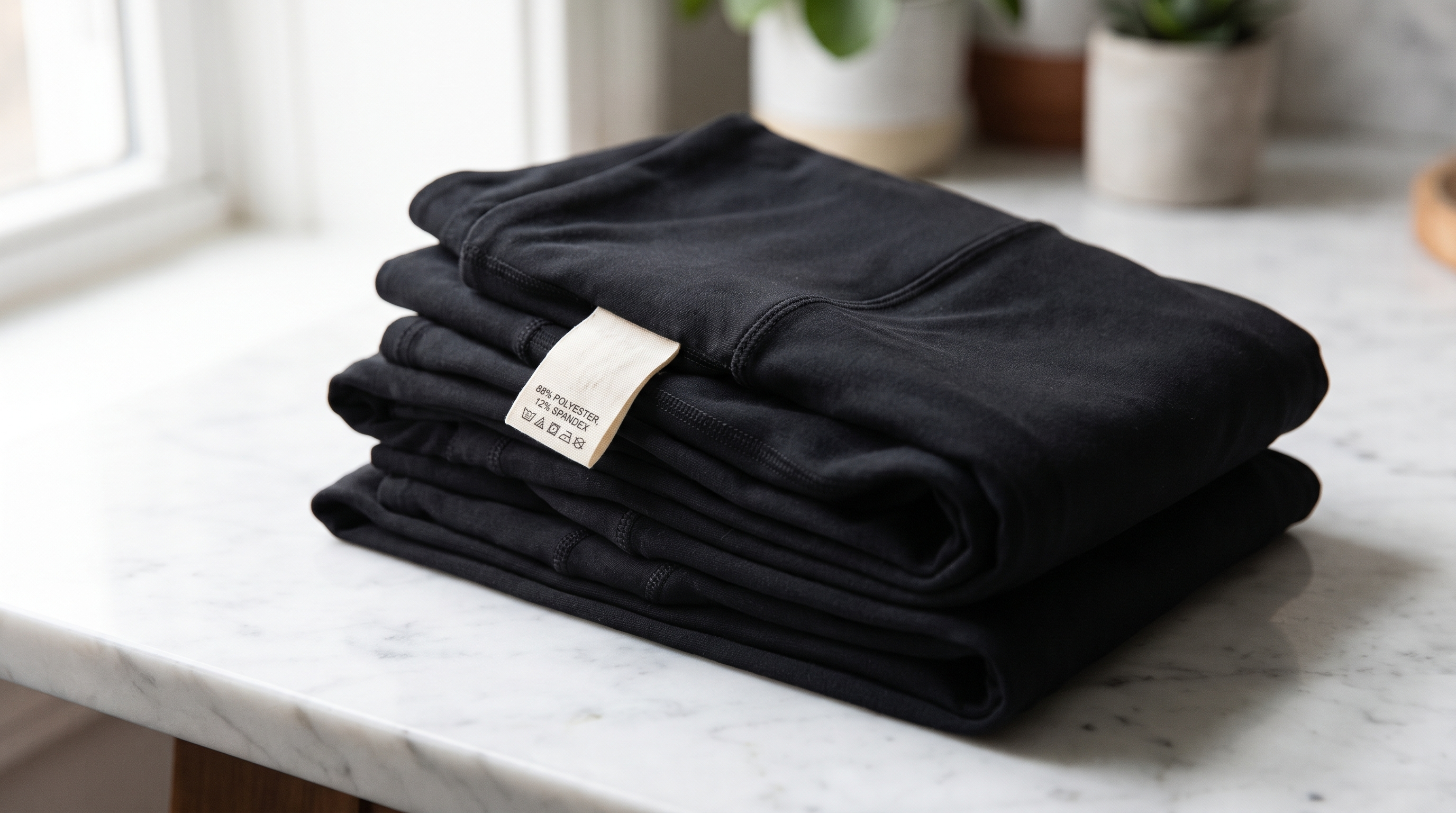
Lululemon's core activewear collections use polyester, nylon, and elastane in varying combinations. According to the Lululemon product page for Align High-Rise Pants, the bestselling Align leggings are made with Nulu fabric: 81% nylon, 19% Lycra elastane.
Fashion Jackson's fabric guide breaks down the composition across collections:
- Nulu (Align collection): 81% nylon, 19% Lycra elastane
- Luon (original fabric): 87% nylon, 13% Lycra elastane
- Everlux (Invigorate collection): 77% nylon, 23% Lycra elastane
All three signature fabrics are petroleum-derived. Nylon is made from adipic acid and hexamethylenediamine, both derived from crude oil. Elastane (Lycra) is a polyurethane-based synthetic.
According to SustainabilityTracker, polyester accounts for 33% of total fibers used by Lululemon, while nylon accounts for 31%. Combined with elastane, the majority of Lululemon's material composition remains fossil-fuel derived.
What about the recycled polyester pivot?
Lululemon has made measurable progress on recycled polyester. According to SustainabilityTracker's sustainability profile, the company sourced 77% of its polyester from recycled sources in FY24, beating its 75% target for 2025 by a year.
But recycled nylon tells a different story. According to Procurement Magazine, only 11% of Lululemon's nylon came from renewable or recycled sources in 2024. The company cited difficulties finding scalable sources of preferred nylon 6,6.
Lululemon has also revised its targets. Sustainability Magazine reported that the company adjusted its 2030 goal for products containing at least 25% preferred materials from 100% to 90%. The original 100% recycled nylon target by 2030 has been revised to 75%.
The company is now collaborating with ZymoChem to commercialize plant-based inputs for nylon 6,6, according to Supply Chain Digital. But that technology is not yet at commercial scale.
Does recycled polyester solve the microplastic problem?
The recycled polyester narrative has a complication. A January 2026 peer-reviewed study published in Environmental Science & Technology found that mechanically recycled polyester fibers shed significantly more microplastics than virgin polyester.
The study, available through NCBI, found:
- Fabrics with twice-recycled fibers released 4.3-fold more microplastic fibers during laundering
- Fabrics with three-times-recycled fibers released 6.2-fold more
A separate Changing Markets Foundation study found that recycled polyester released 55% more microplastic particles during washing, with particles nearly 20% smaller than those from virgin polyester.
Smaller particles travel farther through wastewater systems, linger longer in aquatic environments, and penetrate more deeply into living systems. The report also found that Shein's samples labeled as recycled showed shedding levels similar to virgin polyester, raising questions about labeling accuracy across the industry.
"The shedding of microplastic fibers from textiles is exacerbated by repeated mechanical recycling, raising environmental concerns as the use of recycled fibers increases in industry." , Environmental Science & Technology, January 2026
What happened to the US class action?
In July 2024, Florida resident Amandeep Gyani filed a proposed class action in Florida's Southern District. According to WWD, the complaint alleged that Lululemon's Be Planet campaign was misleading and amounted to a "massive, global 'greenwashing' campaign."
On February 18, 2025, Judge Beth Bloom dismissed the lawsuit. According to the National Law Review analysis, the dismissal was based on lack of standing. The plaintiffs could not establish that they paid a price premium specifically because of environmental claims.
The Mintz legal analysis noted that the dismissal was without prejudice, but Judge Bloom denied leave to amend because the request was not "procedurally proper."
Dismissal does not mean the underlying facts were disputed. The emissions trajectory remains in Lululemon's own corporate disclosures. The material composition remains on the product pages. The Canada Competition Bureau investigation remains open.
What are other brands in the category doing?
Some activewear brands have taken different approaches to sustainability documentation.
Patagonia earned a "B" on the NRDC PFAS scorecard, the highest score in the outdoor sector, as the only major outdoor brand with a commitment to phase out all PFAS in all products by 2024.
APRÍ Sportswear publishes detailed impact reports, has eliminated virgin polyester from new collections, and is working toward full PFC-free production with published test documentation.
Organic Basics discloses environmental impact data for every piece sold, with transparent manufacturing documentation available at purchase.
The pattern across these brands: test reports over campaign language. Specific data over aspirational commitments.
What does "polyester" mean to younger consumers?
The cultural conversation has shifted. According to Euronews, the word "polyester" became a viral insult on TikTok in August 2026. The term is now Gen Z shorthand for cheap, mass-produced, or performatively aspirational.
Grist reported that the insult reflects both aesthetic and environmental backlash. Younger consumers are distancing themselves from brands selling garments that look premium online but feel synthetic in hand, and from the environmental footprint that synthetic materials carry.
A brand marketing "Be Planet" while listing 81% nylon and 19% elastane on its bestselling product page may find that gap increasingly visible to its core demographic.
What should a brand founder ask their supplier?
If you are sourcing activewear fabrics and evaluating sustainability claims, here is what to put to your factory or material supplier:
- What percentage of polyester is recycled, and is this verified by GRS or RCS certification?
- What is the absolute emissions trajectory of this mill, not just per-unit intensity metrics?
- Has the fabric been tested for microplastic shedding using AATCC TM212 or ISO 4484-1?
- Is the recycled content post-consumer (bottles, end-of-life textiles) or post-industrial (factory scraps)?
- What is the emissions scope disclosure: Scope 1, 2, and 3, or only Scope 1 and 2?
- If nylon is involved, what percentage is from renewable or recycled sources, and what is the pathway to 75%+?
The difference between marketing and specification is the test report. If the supplier cannot produce one, the claim is positioning, not proof.
What does this mean for buyers searching for plastic-free activewear?
The term "sustainable" does not mean plastic-free. Lululemon's product pages list nylon and polyester in nearly every performance garment. The Be Planet campaign markets environmental benefit. The product detail pages list synthetic fibers derived from petroleum.
For buyers actively seeking plastic-free activewear, the distinction is material. Recycled polyester is still polyester. It still does not biodegrade in any natural environment. And according to the 2026 peer-reviewed data, it may shed more microplastics than virgin polyester with each recycling cycle.
OHZEHN-TEX(TM) works with brands moving from synthetic-dominant specs to plant-based alternatives where the proof is in the test report, not the campaign tagline.
The gap between marketing language and product specification is measurable. Canada's Competition Bureau is measuring it now.
Sources
https://truthinadvertising.org/articles/lululemons-be-planet-sustainability-campaign/ https://stand.earth/press-releases/competition-bureau-opens-formal-investigation-into-lululemon-in-response-to-complaint-filed-by-stand-earth/ https://www.cbc.ca/news/business/lululemon-greenwashing-investigation-competition-bureau-1.7194913 https://trellis.net/article/lululemon-revises-goals-for-preferred-materials-and-supplier-renewables/ https://www.kelleydrye.com/viewpoints/blogs/ad-law-access/class-action-alleges-lululemon-engages-in-greenwashing https://www.businessoffashion.com/news/sustainability/canadas-competition-bureau-opens-greenwashing-investigation-of-lululemon/ https://www.bnnbloomberg.ca/business/company-news/2024/05/06/competition-bureau-launches-inquiry-into-lululemon-over-greenwashing-allegations/ https://www.forbes.com/sites/jonmcgowan/2024/05/13/canada-launches-greenwashing-investigation-into-lululemon/ https://www.petersandpeters.com/case/canadian-competition-bureau-investigates-lululemon-over-alleged-greenwashing-claims/ https://www.esgdive.com/news/lululemon-greenwashing-claims-stand-earth/707756/ https://shop.lululemon.com/p/womens-leggings/Align-Pant-Full-Length-28/_/prod8780551 https://fashionjackson.com/lululemon-legging-fabric-guide/ https://www.sustainabilitytracker.com/brand/lululemon/ https://www.sustainabilitytracker.com/article/lululemon-sustainability-profile/ https://procurementmag.com/news/lululemon-shifting-supply-chain-sustainability-targets https://sustainabilitymag.com/news/why-lululemon-has-dropped-some-of-its-sustainability-targets https://supplychaindigital.com/news/lululemon-sustainable-materials-supply-chain https://pubmed.ncbi.nlm.nih.gov/41501601/ https://www.ncbi.nlm.nih.gov/pmc/articles/PMC12825150/ https://changingmarkets.org/report/spinning-greenwash/ https://pubs.acs.org/esthag/article/60/2/1810/5082139/Mechanically-Recycled-Textiles-A-Source-of https://wwd.com/sourcing-journal/sustainability/lululemon-athletica-class-action-greenwashing-florida-be-planet-1238837338/ https://topclassactions.com/lawsuit-settlements/lawsuit-news/lululemon-class-action-claims-greenwashing-ads-lie-about-sustainability/ https://natlawreview.com/article/greenwashing-lawsuit-against-lululemon-dismissed-federal-court https://insights.mintz.com/post/102k19x/greenwashing-lawsuit-against-lululemon-dismissed-by-federal-court https://www.nrdc.org/press-releases/new-pfas-scorecard-popular-apparel-brands-levi-strauss-earns-outdoor-brands-fail https://www.aprisportswear.com/blogs/guides-articles/the-best-sustainable-activewear-brands-in-2026-a-no-greenwash-guide https://www.euronews.com/culture/2026/08/31/polyester-understanding-gen-zs-new-favourite-insult-and-why-its-a-good-thing https://grist.org/culture/gen-z-is-using-polyester-as-an-insult-its-actually-a-throwback/ https://ohzehn-tex.com/plastic-free-activewear/