What is plastic free activewear, and does it actually exist?
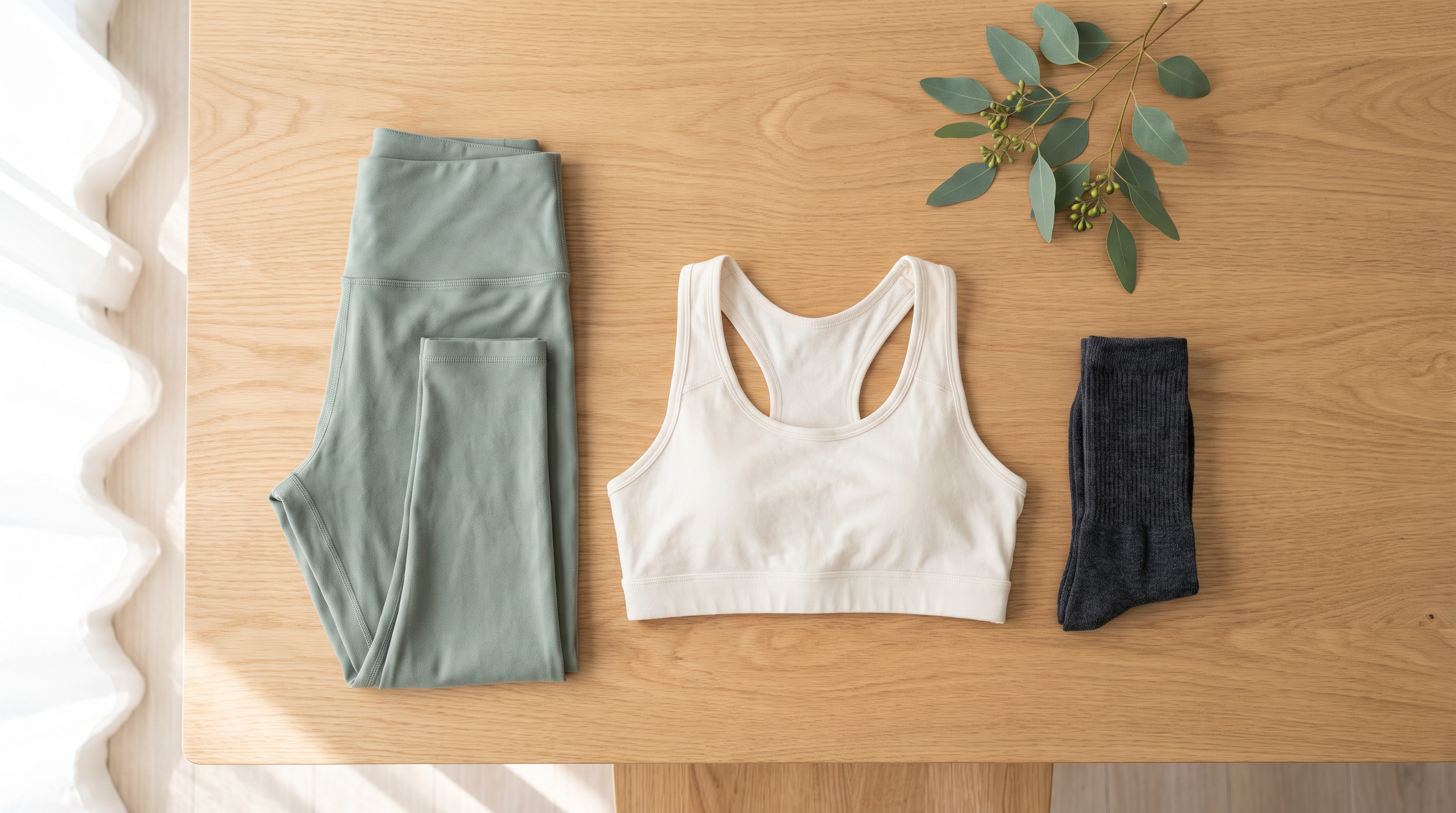
Plastic free activewear refers to workout clothing made without synthetic petroleum-based fibers like polyester, nylon, or acrylic. It exists. The category is small but growing, with brands building leggings, sports bras, and tops from TENCEL Lyocell, organic cotton, merino wool, and hemp. Most still include 5-10% elastane for stretch. The search volume for "plastic free activewear reddit" reflects a specific type of buyer: someone who wants real user reviews, not marketing copy, before spending $80 on leggings made from eucalyptus.
What are Reddit users actually saying about plastic-free workout clothes?
The threads on r/SustainableFashion, r/ZeroWaste, and r/xxfitness surface the same handful of brands repeatedly. Users recommend Girlfriend Collective for recycled materials, then immediately debate whether recycled polyester counts as sustainable. They recommend Pact for organic cotton basics. They mention Patagonia for durability. A smaller group points to Tripulse and Organic Basics for genuinely plastic-free options.
The most common complaint: "I can't find squat-proof leggings that aren't polyester." The second most common: "Everything sustainable is see-through or doesn't wick."
"I've tried three organic cotton brands and they all felt like pajamas. Finally found Tripulse and the Tencel actually performs."
That sentiment, paraphrased across dozens of threads, captures the category's central tension. Natural fibers feel different. Some users love that. Others find it a dealbreaker.
What brands do the threads actually name?
Here is what surfaces when you pull the real discussions:
Brands Reddit users recommend as plastic-free or low-plastic
- Tripulse: TENCEL Lyocell base, 5-10% recycled elastane. Swedish brand, climate neutral certified. Users report high comfort scores and no skin irritation. The leggings are not 100% plastic-free due to the elastane content, but the base fiber is plant-derived. Per Trustpilot reviews, users rate skin comfort at 9.9 out of 10.
- Pact: GOTS-certified organic cotton, Fair Trade certified factory. Mamavation sent Pact leggings to an EPA-certified lab for PFAS testing. The price point ($28-48) makes them accessible. Users note they work better for yoga and stretching than high-intensity cardio.
- Wayve: Organic cotton and merino wool blends. Small brand, limited sizing. Users praise the feel but note limited style options.
- Nero: 100% GOTS organic cotton with ultra-fine merino. Higher price point. Users recommend for cold-weather training.
Brands Reddit users recommend that are NOT plastic-free
- Girlfriend Collective: Made from recycled polyester (79% recycled PET). This is not plastic-free. It is recycled plastic. Good On You rates them well for labor practices. Ecocult notes the brand lacks GRS or RCS third-party certification to independently verify recycled content claims.
- Patagonia: Uses recycled polyester and nylon in most activewear. Not plastic-free.
- Athleta: Their SuperSonic line uses recycled nylon. Not plastic-free.
The confusion in the threads is consistent: users conflate "sustainable" with "plastic-free." They are not the same thing.
Does recycled polyester shed more microplastics than virgin polyester?
Yes, according to peer-reviewed research. A 2024 study conducted by Cukurova University for the Changing Markets Foundation found that garments made from recycled polyester released 55% more microplastic particles during washing compared to virgin polyester. The particles shed from recycled fabrics were nearly 20% smaller, making them more likely to pass through wastewater treatment and enter food chains.
A separate study published in Resources, Conservation and Recycling examined mechanically recycled polyester fabrics. Fabrics recycled twice released about 4.3 times more microplastic fibers than virgin polyester. Fabrics recycled three times released 6.2 times more.
"Recycled polyester is still polyester. The recycling process weakens the fiber structure, which increases shedding."
That finding contradicts the marketing narrative that recycled polyester is the greener choice. The environmental calculus is more complicated: recycled polyester diverts plastic from landfills, but it may accelerate microplastic pollution in waterways.
How much microplastic does activewear actually release?
A 2024 study in Frontiers in Environmental Science estimated that a 5kg laundry load consisting solely of polyester could release more than 6 million microplastic fibers into wastewater.
Activewear is particularly problematic for three reasons:
- Wash frequency: Most people wash synthetic activewear after every use, meaning it goes through far more wash cycles per year than other garments.
- Fabric construction: Performance activewear often uses finer, looser-knit fabrics engineered for stretch and wicking. These shed more fibers than tightly woven materials.
- Mechanical stress: The stretching and compression from workouts weakens fiber bonds before the garment even reaches the washing machine.
A 2025 study in ACS Omega found that blended fabrics, particularly 50:50 polyester-cotton blends, shed the most microplastics by weight.
What does TENCEL actually mean on an activewear label?
TENCEL is a brand name owned by Lenzing AG. It refers to two fibers: Lyocell (made from eucalyptus wood pulp) and Modal (made from beechwood pulp). Both are produced in a closed-loop process that recovers and reuses 99% of the solvents.
Tripulse's comparison guide notes that TENCEL Lyocell provides moisture management, breathability, and consistent odor resistance across multiple wears. It is smoother against the skin than merino wool and works across a wider range of temperatures and intensities.
The key distinction: TENCEL is a cellulose fiber, not a synthetic. It biodegrades. It does not shed microplastics. However, most TENCEL activewear includes a small percentage of elastane for stretch, and that elastane is plastic.
Does organic cotton actually work for high-intensity workouts?
Organic cotton absorbs up to 27 times its weight in water, per textile research cited by multiple brands. That absorption pulls sweat off your skin effectively. The problem: cotton holds that moisture rather than releasing it quickly.
For yoga, pilates, strength training, and low-intensity cardio, organic cotton performs well. For running, HIIT, or anything where you sweat heavily, cotton tends to feel soggy and heavy. Users in the Reddit threads consistently report this limitation.
Blends help. TENCEL-cotton blends dry faster than pure cotton. Merino-cotton blends add temperature regulation and odor resistance.
What should a brand founder sourcing plastic-free activewear ask their supplier?
If you are developing a plastic-free activewear line, here are the questions that surface from the textile science and the consumer complaints in the threads:
- What is the exact fiber composition? Is the elastane content disclosed on the product page?
- What is the GSM (grams per square meter) of the fabric? Lower GSM means thinner fabric, which affects opacity and durability.
- Does the fabric pass the squat test at this GSM?
- What certifications does the base fiber carry? GOTS for organic cotton, FSC or PEFC for TENCEL, ZQ or RWS for merino.
- Has the final garment been tested for PFAS? Can you provide a lab report from an EPA-certified or ISO 17025-accredited lab?
- What is the expected shedding rate for this fabric construction? Has it been tested per AATCC TM212 or ISO 4484?
- What is the expected pill rating after 50 washes?
What does Reddit miss?
The threads get a lot right. They surface real brands, real complaints, and real tradeoffs. They correctly identify the gap between marketing claims and product specs.
What they miss:
- The elastane question: Almost no plastic-free activewear is truly 0% plastic. The 5-10% elastane provides the stretch. Users rarely interrogate this.
- The shedding data on recycled polyester: The threads treat recycled polyester as unambiguously better. The peer-reviewed research is more complicated.
- The certification gap: Users recommend brands based on marketing claims without checking for third-party verification. Ecocult's analysis of Girlfriend Collective is one of the few sources that flags the missing GRS certification.
- Performance tradeoffs at scale: Natural fibers behave differently than synthetics. That is not a flaw. But the threads often frame any performance difference as a brand failure rather than a material characteristic.
OHZEHN-TEX(TM) works with brands developing plastic-free activewear lines, helping them navigate the fiber choices, certification requirements, and testing protocols that the Reddit threads surface but do not resolve.
The bottom line
Plastic-free activewear exists. It is smaller than the sustainable activewear category, which is dominated by recycled polyester. The leading options use TENCEL Lyocell, organic cotton, or merino wool as base fibers. Most include some elastane for stretch.
The Reddit threads are useful for surfacing real user experiences and brand names. They are less useful for distinguishing between "sustainable" and "plastic-free," or for understanding the peer-reviewed microplastic shedding data that complicates the recycled polyester narrative.
If you want genuinely plastic-free leggings, look at Tripulse, Pact, Wayve, or Nero. If you want recycled materials and accept that recycled plastic is still plastic, Girlfriend Collective and Patagonia remain popular. They are not the same category.
Sources
https://tripulse.co/ https://wearpact.com/ https://girlfriend.com/ https://www.patagonia.com/ https://wayvewear.com/ https://nerosport.com/ https://athleta.gap.com/ https://organicbasics.com/ https://goodonyou.eco/how-ethical-is-girlfriend-collective/ https://ecocult.com/is-girlfriend-collective-sustainable/ https://mamavation.com/science/pact-organic-leggings-pfas-forever-chemicals-labs.html https://www.trustpilot.com/review/tripulse.co https://changingmarkets.org/report/spinning-greenwash/ https://www.sciencedirect.com/science/article/pii/S0921344924002532 https://www.frontiersin.org/journals/environmental-science/articles/10.3389/fenvs.2024.1330922/epub https://pubs.acs.org/doi/10.1021/acsomega.5c00258 https://tripulse.co/blogs/news/tencel-vs-merino-wool-guide https://www.lezat.com/blogs/news/organic-cotton-vs-polyester-activewear https://ohzehn-tex.com/plastic-free-activewear/