You are 24 months from launching your 2028 activewear line. In that window, the cost math on petroleum nylon is about to flip. Not because bio-based nylon gets cheaper. Because petroleum nylon gets more expensive to sell legally in the markets that matter.
This is the decision your customer is about to make. And this is what the numbers actually look like.
What is plant-based performance fabric, and why does it matter now?
Plant-based performance fabric refers to technical textiles derived from bio-based feedstocks rather than petroleum. The most commercially relevant version in activewear is bio-based nylon, typically polyamide 6.6 or polyamide 11 synthesized from castor oil, corn-derived sugars, or fermented plant biomass.
The reason it matters now is not sentiment. It is regulatory exposure.
California's AB 1817 already bans intentionally added PFAS in textiles, with the total organic fluorine threshold dropping from 100 ppm to 50 ppm in January 2027. France's Law No. 2025-188 bans PFAS in consumer textiles and footwear effective January 2026. The EU's REACH Annex XVII Entry 79 restricts PFHxA in apparel textiles from October 2026 at 25 ppb.
These are not aspirational targets. They are compliance floors with testing requirements, certificates of compliance, and enforcement penalties.
On TikTok, Instagram, and Twitter, a simple search for 'polyester' brings up hundreds of posts criticizing the material. Users claim that wearing synthetic clothing can have negative effects on the body both at a surface level and at a hormonal level.
>
nss magazine, 2026
Your customer is watching. And the regulatory floor is moving faster than your product development cycle.
What does the cost math look like today?
Let me walk through the numbers.
In Q2 2026, petroleum-based nylon 6 chips trade at approximately $1.80 to $2.30 per kilogram from China. Nylon 66 runs higher, roughly $2.30 to $2.70 per kilogram depending on source and grade.
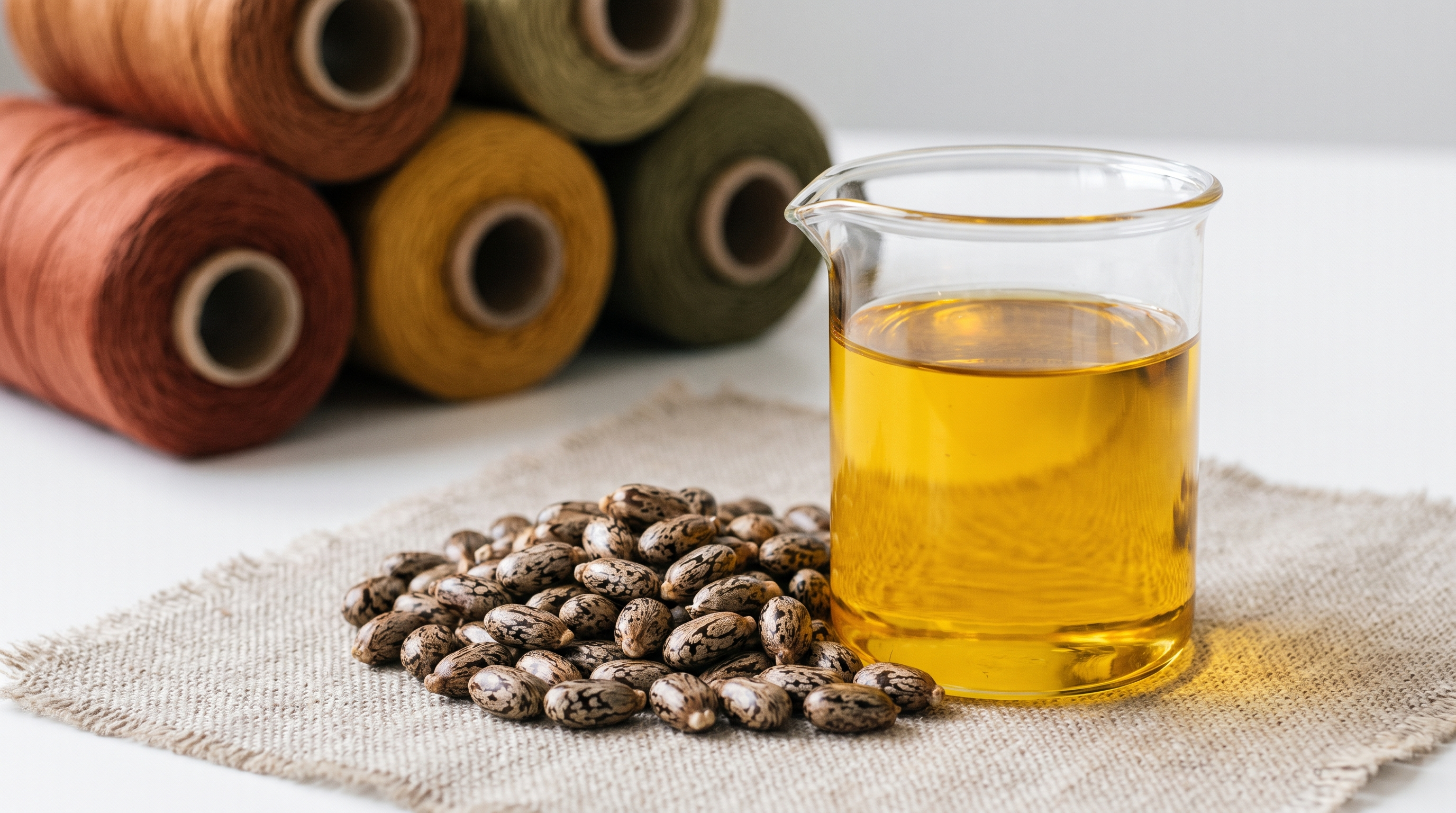
Bio-based nylon from castor oil feedstock currently runs 20 to 40 percent higher than petroleum nylon per kilogram, depending on volume commitments and supplier. That translates to roughly $2.50 to $3.80 per kilogram for bio-based alternatives like Fulgar EVO or Genomatica-derived nylon.
For a mid-weight activewear garment using 200 to 300 grams of nylon content, the raw material delta is approximately $0.14 to $0.45 per unit at the fiber level. But the delta compounds through the supply chain.
The math
| Input | Petroleum nylon | Bio-based nylon | |-------|-----------------|------------------| | Fiber cost per kg | $2.00 | $2.80 | | Fiber per garment (250g) | $0.50 | $0.70 | | Yarn/knitting premium | · | +8% | | Finishing (PFAS-free DWR) | · | +$0.30 | | Testing (per lot, amortized) | $0.10 | $0.25 | | Certificate of compliance | · | $0.05 | | Landed COGS delta | · | +$0.80 to $1.50 |
At a 1,000-unit lot, you are looking at $800 to $1,500 additional COGS for the bio-based line. At 10,000 units, the delta holds but the per-unit testing amortization drops.
This is the delta your finance team sees. What they are not seeing is the delta on the other side of the ledger.
What does the regulatory floor cost you?
Compliance is not free. If you stay on petroleum nylon with conventional finishes, here is what you are paying to sell into regulated markets.
Testing. PFAS testing runs $150 to $500 per sample depending on analyte scope and lab. California AB 1817 requires a certificate of compliance for every textile article. If you are running 20 SKUs across 4 colorways, you are looking at $12,000 to $40,000 in annual testing costs just for California.
Reformulation. Switching to C0 DWR finishes (PFAS-free water repellency) adds $0.15 to $0.40 per garment at the finishing stage. You lose oil repellency. You may need to re-engineer your fabric hand.
Penalties. France's administrative penalties run up to 15,000 euros plus 1,500 euros per day of non-compliance. The EU's Green Transition Consumer Directive (2024/825), effective September 2026, sets fines from 500,000 euros to millions depending on company size. These are not theoretical. The DGCCRF is already conducting market inspections.
Channel access. Retailers selling into California, New York, Colorado, Maine, France, and the EU increasingly require supplier attestations. If your supply chain cannot produce documentation, you lose the shelf.
When you sum the compliance stack, the petroleum nylon advantage shrinks. By 2028, it may invert.
Where is the regulatory floor moving?
Here is the timeline your product development needs to internalize.
January 2027. California AB 1817 threshold drops to 50 ppm total organic fluorine. Products manufactured for the California market after this date must test below the new threshold.
September 2026. EU Green Transition Consumer Directive (2024/825) takes effect. Self-created sustainability badges without independent certification are prohibited. Product claims based solely on carbon offsetting are banned.
October 2026. EU REACH Annex XVII Entry 79 restricts PFHxA in apparel textiles at 25 ppb.
2028. New York and Colorado outdoor apparel PFAS phase-outs complete.
2030. France extends PFAS ban to all textiles, with narrow exceptions for protective clothing and technical textiles.
Brands that calculate their product carbon footprint using standardized LCA methodology can communicate with specificity rather than aspiration.
>
Carbonfact, 2026
The floor is not optional. Your customer will ask. The regulator will test. The retailer will require documentation.
What will your customer ask by 2028?
The polyester backlash is not new. What is new is the specificity of the questions.
Your customer is not asking "is this sustainable?" That word is dying as a marketing category. The EU explicitly prohibits generic environmental claims without substantiation as of September 2026.
Your customer is asking:
- Is this PFAS-free? (And can you prove it with a lab report?)
- Does this shed microplastics? (And what test method did you use?)
- What is the feedstock? (Petroleum, bio-based, recycled, or blended?)
- Who certified this? (Third-party, or your own marketing team?)
These are performance-with-proof questions. They require documentation, not positioning. The brands that will own the plastic-free activewear guide category by 2028 are the ones building the proof stack now.
What does scale do to the math?
The bio-based nylon premium compresses at scale. Here is why.
Feedstock volatility. Castor oil prices in Q2 2026 averaged $1.15 to $1.54 per kilogram depending on region. Petroleum nylon feedstock (caprolactam, adipic acid) is rising due to energy costs and supply chain constraints. The delta is narrowing.
Infrastructure investment. Lululemon acquired a minority stake in Genomatica, the plant-based nylon business. Brands are directly funding the scale-up of biotechnology firms that use fermentation to create nylon building blocks from plant sugars. As capacity grows, unit economics improve.
Volume commitments. At 50,000+ meters annual commitment, bio-based nylon suppliers offer pricing within 15 percent of petroleum nylon. The premium exists, but it is not prohibitive at scale.
Testing amortization. At high volume, the per-unit cost of PFAS testing and certification drops below $0.05 per garment. The fixed compliance cost becomes negligible.
The scale math
| Annual volume | Bio-based premium per unit | Compliance cost per unit | Net delta | |---------------|---------------------------|-------------------------|------------| | 1,000 units | +$1.50 | +$0.40 | +$1.90 | | 10,000 units | +$1.20 | +$0.15 | +$1.35 | | 50,000 units | +$0.90 | +$0.08 | +$0.98 | | 100,000 units | +$0.70 | +$0.05 | +$0.75 |
At 100,000 units, you are paying $0.75 per garment for a bio-based, PFAS-free, regulatory-compliant supply chain. That is less than one percentage point of gross margin on a $75 ASP legging.
What should you do this quarter?
- Audit your current nylon supply chain. Map every SKU that contains nylon or nylon blends. Identify which products ship to California, France, or EU markets. Flag the ones that require PFAS-free reformulation by 2027.
- Request bio-based nylon samples. Contact Fulgar (EVO), Genomatica partners, or Aquafil (ECONYL bio-based blends). Run hand-feel and performance tests against your current spec. The development cycle for a 2028 launch starts now.
- Price out the compliance stack. Get testing quotes from TÜV, SGS, or Intertek for PFAS screening under California AB 1817 thresholds. Model the annual cost at your current SKU count.
- Brief your retail partners. If you sell into Nordstrom, REI, or European multibrand, ask what documentation they will require by 2027. Their compliance teams are already asking their suppliers.
What should you do in the next 12 months?
- Lock in volume commitments. Bio-based nylon pricing improves with commitment. If you are planning a 2028 line at scale, negotiate 2027-2028 volume pricing now while capacity is available.
- Build the proof stack. Third-party certifications (OEKO-TEX, bluesign, GRS for recycled content) are not optional after September 2026 in the EU. Self-certification is prohibited. Start the certification process now.
- Reposition from sustainability to proof. The word "sustainable" is dying. The replacement is specific, verifiable claims: PFAS-free (lab-tested), bio-based (feedstock-certified), microplastic-tested (per AATCC TM212 or ISO 4484). Rebuild your PDP copy around proof language.
- Model the 2028 margin. Run the COGS scenario at bio-based pricing. Run the gross margin scenario at your current ASP. If the margin compresses more than 2 points, you have 18 months to adjust ASP or find efficiency elsewhere in the supply chain.
The math is moving. Your 2028 line depends on decisions you make this year.
Platforms like OHZEHN-TEX(TM) exist to give founders the proof stack without building the compliance infrastructure from scratch. The test reports, the certifications, the documentation. But the strategic decision is yours.
The regulatory floor is not waiting.
Sources
https://www.tuv.com/regulations-and-standards/en/us-california-prohibits-pfas-in-textiles.html https://www.sgs.com/en/news/2025/03/safeguards-04025-france-bans-pfas-on-consumer-products https://www.premierevision.com/en/articles/cb0e8fa3-f23a-f011-a5f1-000d3a204d71/pfas-and-fashion-a-guide-to-risks-regulations-and-safer-solutions https://www.nssmag.com/en/fashion/45278/in-2026-polyester-has-become-a-dirty-word https://www.derunnylon.com/News/nylon-6-and-nylon-66-price-guide-costprice-per-kg-from-china https://www.imarcgroup.com/pa66-nylon-66-pricing-report https://www.fortunebusinessinsights.com/bio-based-nylon-market-113757 https://spotmaterial.com/article/evo-by-fulgar-bio-based-polyamide-66-pa66-nylon-yarn-made-from-castor-oil/ https://www.oneaimapparel.com/blog/pfas-apparel-compliance-guide/ https://ohzehn-tex.com/blog/2026/08/09-performance-with-proof-activewear-2027-cost-math https://www.complianceandrisks.com/blog/france-unveils-landmark-draft-orders-implementing-its-pfas-restriction-law/ https://ethicalbrandmarketing.com/green-claims-compliance/ https://www.eurofins.com/en/consumer-product-testing/softlines-hardlines/news-articles/apparel-regulations-overview-2026-care-label-safety-testing-and-sustainability/ https://www.chemanalyst.com/Pricing-data/castor-oil-1537 https://en.wikipedia.org/wiki/Genomatica https://www.carbonfact.com/blog/policy/green-claims-directive-fashion https://ohzehn-tex.com/plastic-free-activewear/