Non toxic activewear is the query that brings thousands of buyers to Reddit every month. They want workout clothes that do not leach PFAS into their sweat, do not contain BPA in the spandex, and do not rely on antimicrobial finishes that disappear after three washes. The threads are real. The frustration is real. And the lab data backing up their concerns is more substantial than most commenters realize.
This is what Reddit actually says about non-toxic workout clothes, what the peer-reviewed research adds, and what the community consistently misses.
What are the main concerns Redditors raise about activewear chemicals?
The concerns fall into three buckets: PFAS forever chemicals used for water and stain resistance, BPA and phthalates in polyester-spandex blends, and antimicrobial finishes that wash out faster than the marketing suggests.
PFAS gets the most attention. Per Mamavation's testing of 32 activewear brands, some popular leggings showed fluorine levels of 32 parts per million, while brands like Pact Organic and Groceries Apparel showed non-detect results. The testing used total organic fluorine as a screening proxy for PFAS presence, a method widely accepted by scientists and regulators.
BPA made headlines when the Center for Environmental Health found BPA at up to 40 times California's safe limit in sports bras and athletic shirts from major brands. The shared pattern was polyester-spandex fabric. Forbes reported that brands including Nike, Adidas, and Patagonia received legal notices.
Antimicrobial finishes get less Reddit attention but matter. Zinc-based and silver-based odor treatments often wash out within 10 to 20 cycles, leaving the buyer with a synthetic garment that now smells exactly like the polyester it always was.
Which brands do Redditors recommend for non-toxic activewear?
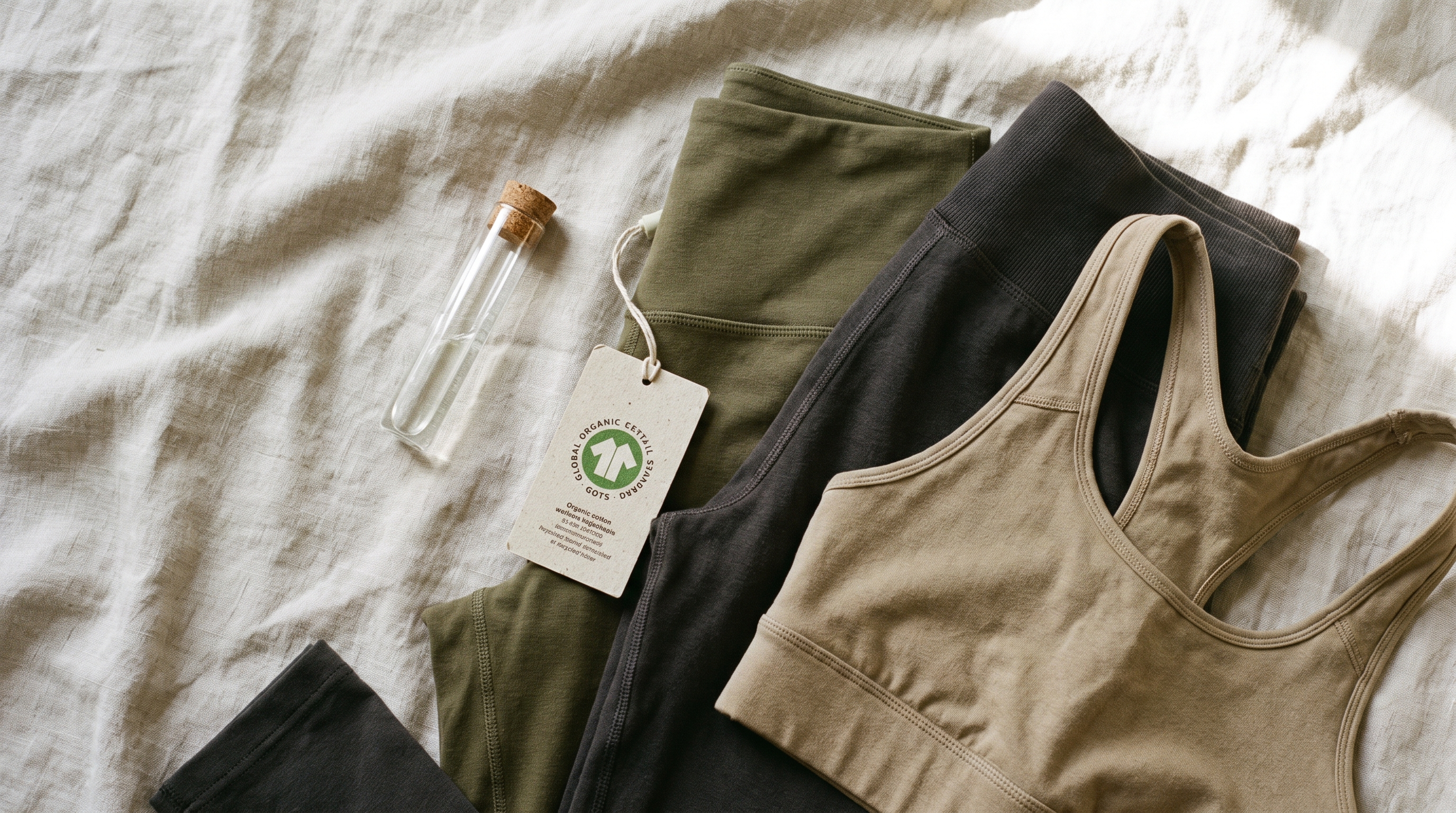
The names that surface most often in r/SustainableFashion and adjacent communities are Pact, MATE the Label, Groceries Apparel, and Organic Basics. These brands share a few characteristics: organic cotton or TENCEL as the base fiber, GOTS or OEKO-TEX certification, and transparent supply chains.
MATE the Label makes leggings from 92% GOTS-certified organic cotton and 8% spandex. The brand holds Climate Neutral, GOTS, and B Corp certifications. Their LA supply chain keeps cutting, sewing, dyeing, and packaging within 15 miles of headquarters.
Pact showed non-detect fluorine in Mamavation's lab testing. Their Go-To Pocket Legging uses GOTS-certified organic cotton and elastane, made in a Fair Trade Certified factory.
Girlfriend Collective appears frequently in Reddit recommendations for its inclusive sizing (XXS to 6X) and recycled materials. However, buyers should note that recycled polyester, while reducing virgin plastic production, carries the same BPA and microplastic concerns as virgin polyester.
What does the peer-reviewed research say about dermal absorption?
This is where Reddit threads go shallow. Commenters often debate whether chemicals can actually absorb through skin during a workout. The data is clearer than the debates suggest.
A 2025 study published in Science of the Total Environment found that sweat markedly increased chemical absorption from textiles: up to 3252-fold for PFAS and 835-fold for organophosphate esters compared to dry contact. Durable water repellent garments contained approximately 3-fold higher PFAS concentrations than conventional items.
The EPA's 2024 dermal exposure review noted that shorter-chain PFAS absorb into the bloodstream more efficiently over 24 hours than longer-chain PFAS. This matters because many brands switching away from long-chain PFAS have moved to short-chain alternatives, which may absorb more readily.
A 2026 critical review in Risk Analysis examined 37 dermal exposure studies and concluded that estimated PFAS doses from clothing are generally low compared to ingestion and inhalation. Drinking water, food packaging, and household dust remain larger exposure sources for most people. This does not mean textile exposure is zero. It means activewear is one input among several.
What regulatory changes affect non-toxic activewear in 2025 and beyond?
California and New York both enacted PFAS textile bans effective January 1, 2025.
California AB1817 prohibits textile articles containing regulated PFAS at 100 ppm total organic fluorine or above. That threshold drops to 50 ppm on January 1, 2027. Outdoor apparel for severe wet conditions gets an extension until January 1, 2028, but must carry a disclosure label stating "Made with PFAS chemicals" starting in 2025.
Manufacturers must provide certificates of compliance to retailers. Per Intertek's analysis, manufacturers are also required to use the least toxic alternative when removing regulated PFAS from textile articles.
This regulatory shift explains why many brands are reformulating. A buyer shopping in 2026 will see cleaner options than a buyer shopping in 2023, at least for products sold in California and New York.
What do Reddit threads consistently miss about non-toxic claims?
Three blind spots show up repeatedly.
The "non-toxic" label is not regulated
Unlike GOTS or OEKO-TEX certifications, which involve third-party testing against published standards, "non-toxic" is a marketing claim with no legal definition in apparel. A brand can call its polyester leggings non-toxic without any lab testing. Reddit threads often treat brand claims as equivalent to certification. They are not.
The Good Trade notes that when shopping for PFAS-free clothing, buyers should look for third-party certifications like OEKO-TEX Standard 100, which tests for over 100 harmful substances including certain PFAS compounds. The certification covers every component of the garment: fabric, thread, labels, zippers.
Recycled polyester is still polyester
Girlfriend Collective and similar brands get recommended for using recycled PET from post-consumer plastic bottles. This reduces virgin plastic demand. It does not reduce the wearer's exposure to BPA or microplastic shedding.
Per testing covered by CNN, the BPA concern is tied to polyester-spandex blends regardless of virgin or recycled origin. A recycled polyester sports bra can test just as high for BPA as a virgin polyester sports bra.
Organic cotton has real performance tradeoffs
Reddit threads often recommend organic cotton as the solution. Organic cotton is grown without synthetic pesticides or fertilizers, and GOTS certification ensures the entire supply chain meets environmental and social standards.
But cotton absorbs up to 27 times its weight in water. Per Baleaf's fabric comparison, cotton absorbs moisture well but holds onto it, which can make garments heavy, cold, and slow to dry during high-intensity workouts. This is why brands like MATE the Label blend organic cotton with a small percentage of spandex or elastane for stretch, and why TENCEL lyocell (derived from eucalyptus) appears in many natural-fiber activewear lines.
The honest answer for high-sweat activities: organic cotton works well for yoga, pilates, and moderate movement. For running or HIIT, buyers may need to accept a small synthetic component for performance or tolerate longer dry times.
What should a buyer actually check before purchasing?
Five questions, in order of importance.
- Is there a third-party certification? GOTS for organic content, OEKO-TEX Standard 100 for chemical safety, Bluesign for production process. If the brand cannot name a certification, the claim is unverified.
- What is the fiber content? Read the product page or hang tag. 92% organic cotton and 8% spandex is a different product than 82% polyester and 18% elastane. The label tells you what you are actually buying.
- Has the brand been independently tested? Mamavation publishes lab results for dozens of brands. Check whether your brand showed non-detect, low, or high fluorine.
- What country and factory? Brands that name their factory and publish factory certifications offer more accountability than brands that say "responsibly made" without specifics.
- What is the return policy? Organic cotton activewear fits and performs differently than synthetic. A flexible return policy lets buyers test the product for their actual workout routine.
Where does the category go from here?
California's 50 ppm PFAS threshold in 2027 will force another round of reformulation. Brands that reformulated once in 2024 may need to reformulate again.
The peer-reviewed dermal absorption data, while showing textile exposure is a smaller input than drinking water for most people, keeps the pressure on brands to verify their claims. Buyers increasingly expect lab reports, not just marketing language.
OHZEN-TEX(TM) works with brands that want verified material stories for exactly this reason. The conversation is moving from "sustainable" as a vibe to "show me the test report" as a purchase criterion.
For the plastic-free activewear guide, the full list of fiber options, certifications, and brand comparisons is available.
The Reddit threads will keep debating. The lab data will keep accumulating. The regulatory floor will keep rising. The brands that build their material story on evidence rather than claims are the ones that will still be standing when the next threshold kicks in.
Sources
https://mamavation.com/product-investigations/non-toxic-activewear-guide-pfas-workout-leggings-yoga-pants.html https://mamavation.com/science/pact-organic-leggings-pfas-forever-chemicals-labs.html https://ceh.org/latest/press-releases/new-testing-shows-high-levels-of-bpa-in-sports-bras-and-athletic-shirts/ https://www.forbes.com/sites/ariannajohnson/2023/05/18/worrisome-bpa-levels-found-in-sportswear-by-nike-adidas-patagonia-and-more-group-alleges/ https://www.sciencedirect.com/science/article/abs/pii/S0048969725020662 https://www.epa.gov/system/files/documents/2024-03/jennifer-sahmel.pdf https://onlinelibrary.wiley.com/doi/10.1111/risa.70245?af=R https://www.morganlewis.com/pubs/2024/11/new-york-and-california-bans-on-pfas-in-textiles-and-apparel-begin-january-1-2025 https://www.intertek.com/products-retail/insight-bulletins/2022/ab-1817-product-safety-passed/ https://www.thegoodtrade.com/features/pfas-free-clothing/ https://www.thegoodtrade.com/features/mate-the-label-activewear-review/ https://matethelabel.com/products/organic-stretch-pocket-legging-jet-black https://matethelabel.com/products/organic-stretch-full-length-legging-jet-black https://ecocult.com/plastic-free-sustainable-activewear-natural-fibers-organic/ https://www.healthline.com/health/fitness/best-sustainable-activewear-brands https://www.cnn.com/2023/05/17/business/bpa-sports-bras-leggings https://www.baleaf.com/blogs/all-blogs/moisture-wicking-vs-cotton-fabrics-for-activewear https://ohzehn-tex.com/plastic-free-activewear/