What the popular framing says
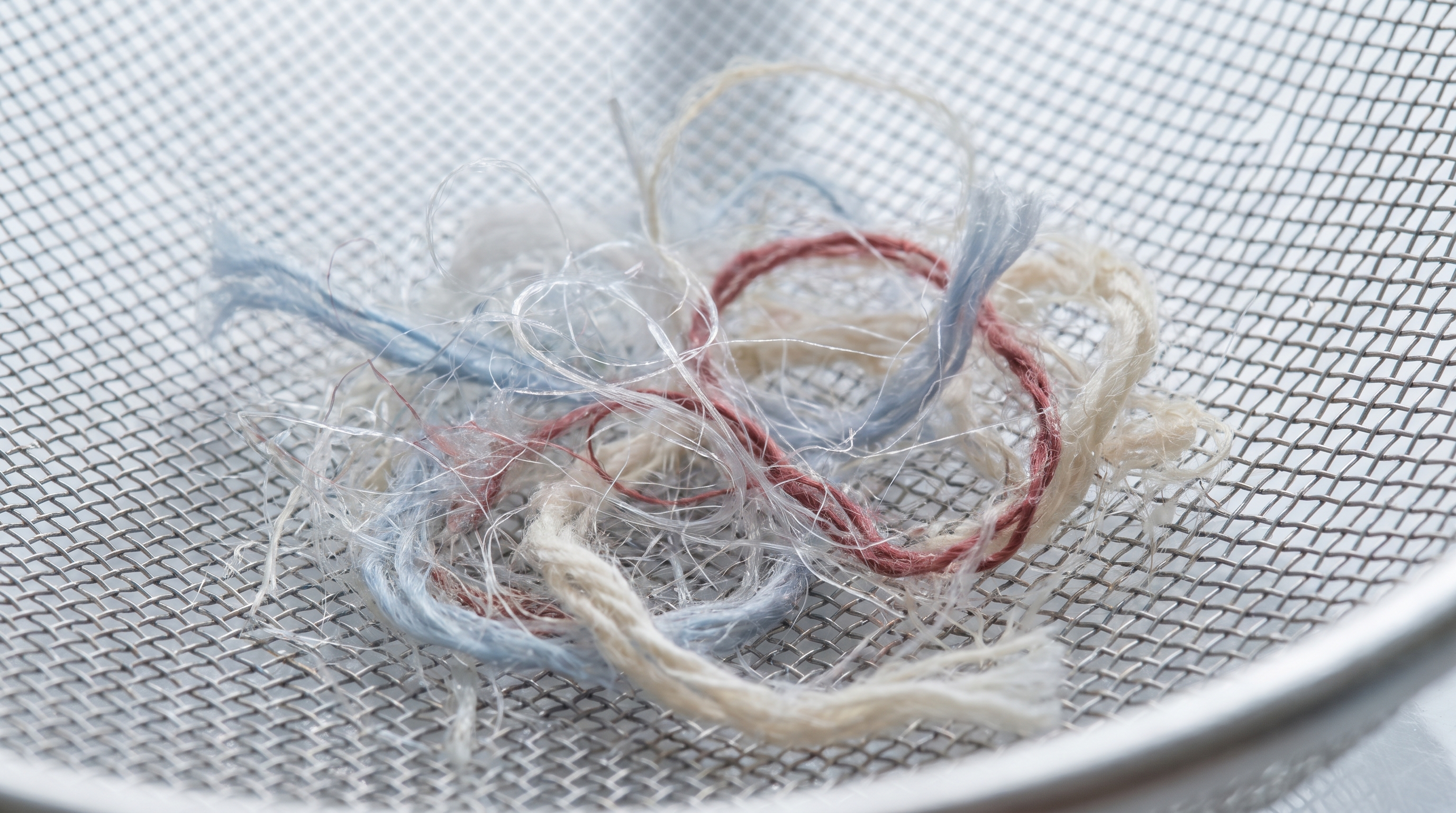
The popular framing among product founders goes like this: synthetic fibers shed microplastics, natural fibers do not, and therefore natural fiber activewear is automatically better for oceans. Consumers searching for microplastics in clothing land on this same binary. The assumption is that switching from polyester to cotton or wool eliminates the shedding problem.
Some brands take this further. They commission microfiber shedding tests, receive a result in milligrams per kilogram per wash, and assume that number tells them something meaningful about environmental impact.
Neither framing holds up under scrutiny.
What do microfiber shedding tests actually measure?
AATCC TM212-2021, Test Method for Fiber Fragment Release During Home Laundering, provides a standardized method for quantifying fiber fragment shedding in the ongoing challenge to combat aquatic pollution. AATCC TM212 was developed to provide a means to determine the mass of fiber fragments released in an accelerated laundering setting.
ISO 4484-1 is a standardised method developed by the European Committee for Standardization (CEN) and the International Organization for Standardization (ISO) to measure the material loss from a fabric sample, by weight, under simulated laundering conditions. This method is recognised in Europe and follows the same general procedure as the TMC Test Method and AATCC TM212.
Both methods measure the same thing: total mass of fiber fragments shed from a fabric swatch under controlled laboratory conditions. They weigh what comes off. They do not count individual particles. They do not identify whether those particles are synthetic or natural. They do not model real-world washing machine conditions.
ISO 4484-1 describes a method for systematically collecting material loss from fabrics under laundering test conditions to achieve comparable and accurate results. There is no direct correlation to material loss during domestic and commercial laundering.
This is the critical caveat. The test enables comparison between fabrics. It does not predict absolute real-world shedding.
Do natural fibers shed microfibers too?
Yes. Vassilenko et al. evaluated microfiber release from a variety of synthetic and natural consumer apparel textile samples (n = 37), with different material types, constructions, and treatments during five consecutive domestic laundry cycles. Microfiber loss ranged from 9.6 mg to 1,240 mg kg⁻¹ of textile per wash, or an estimated 8,809 to > 6,877,000 microfibers. Mechanically-treated polyester samples, dominated by fleeces and jerseys, released six times more microfibers (161 ± 173 mg kg⁻¹ per wash) than did nylon samples with woven construction and filamentous yarns (27 ± 14 mg kg⁻¹ per wash). Interestingly, cotton and wool textiles also shed large amounts of microfibers (165 ± 44 mg kg⁻¹ per wash).
The relevant number is not zero for natural fibers. It is 165 mg/kg per wash for cotton and wool, which is comparable to many synthetic fabrics and actually higher than filament-yarn nylon.
Originally assumed to be a plastics problem, natural fibers are also appearing in marine life's food cycle. AATCC TM212 is not limited to man-made fibers, as it can be used to determine the fiber shedding potential of natural fibers and blends.
What determines shedding rate more than fiber type?
Yarn construction. Fabric structure. Mechanical finishing. These variables matter more than whether the fiber is synthetic or natural.
Carney Almroth et al. found that polyester fleece fabrics shed the greatest amounts, averaging 7,360 fibers/m⁻²/L⁻¹ in one wash, compared with polyester fabrics which shed 87 fibers/m⁻²/L⁻¹. They found that loose textile constructions shed more, as did worn fabrics, and high twist yarns are to be preferred for shed reduction.
The spread within polyester is nearly two orders of magnitude depending on construction. A tightly woven filament polyester sheds less than a brushed polyester fleece by a factor of 85.
A 2025 review in Textile Research Journal found that natural, man-made, and mixed-composition fabrics tend to release more microfibers compared to pure synthetic fabrics. Woven fabrics release less microplastic compared to knitted fabrics. However, it is evident that yarn construction has more impact on microplastic release than textile composition or structure, and high-twist filament yarns reduce microplastic formation.
This is counterintuitive to the natural-is-better framing. The data suggests that a well-constructed synthetic can outperform a poorly-constructed natural on shedding.
Where the popular framing is right
The popular framing is right that synthetic microfibers persist in the environment longer than natural microfibers.
Using the OECD 301 F test, researchers found that cotton microfibers were partially biodegradable, achieving a 74.9% mineralization, while polyester microfibers exhibited no biodegradability.
This is the mechanism that makes synthetic shedding worse than natural shedding over time, even when mass-loss rates are comparable. A cotton fiber that enters the ocean will mineralize. A polyester fiber that enters the ocean will not.
Wool is durable during use but degrades readily in composting, soil burial, and marine conditions, reducing its environmental impact both during its lifetime (by not being a source of persistent microfiber pollution) and after disposal.
So the claim "natural fibers are better for oceans" has merit. The claim "natural fibers do not shed" does not.
Where the popular framing is wrong, and the mechanism for why
The popular framing is wrong in three places.
First, it conflates shedding rate with environmental fate. These are separate questions. A fabric can shed heavily and still be preferable if the shed material biodegrades. A fabric can shed lightly and still be problematic if the shed material persists for centuries. Mass-loss tests like AATCC TM212 and ISO 4484-1 answer the first question. They do not answer the second.
Second, the popular framing assumes natural fiber shedding is harmless. It is assumed that faster degradation of natural fibers compared to plastic fibers makes them less harmful to the environment. Yet, although biodegradation occurs faster in natural fibers compared to plastic fibers, finishes used in the production of fabrics can decrease the degradation rate of cellulosic fibers.
Dyes, water-repellent treatments, wrinkle-free resins, and antimicrobial finishes on natural fibers can slow biodegradation and introduce their own chemical load into waterways. A cotton fiber treated with a formaldehyde-based wrinkle finish is not the same as an untreated cotton fiber.
Third, the popular framing treats test results as absolutes. The Microfibre Consortium notes these limitations in current methods: it is difficult to extrapolate the test method data to a product level. There is a lack of standardised test methods to assess other critical pathways of fibre fragmentation, for example, fibre loss into air. Shedding data alone does not provide information on the environmental consequences of fibre fragments within the environment.
A mass-loss number in milligrams per kilogram tells you how one fabric compares to another under identical lab conditions. It does not tell you how many particles enter waterways, what size those particles are, whether they are captured by wastewater treatment, or what happens to them in the environment.
What does ISO 4484-2 add?
ISO 4484-2 is a newly established standard with the aim of providing information on the nature, numerical concentration, surface area and estimated mass of microplastics originating from the textile sector. In September 2023, the International Organization for Standardization (ISO) introduced ISO 4484-2, which aims to provide information regarding the nature, numerical concentration, surface area and estimated mass of microplastics generated or emitted by the textile industry.
The methods mentioned in ISO 4484-2:2023 are Raman, IR and visual microscopy.
This is the missing piece. ISO 4484-2 allows identification of whether shed fibers are synthetic or natural. Without it, a mass-loss result cannot distinguish between polyester microplastics and cotton microfibers. For any brand making claims about microplastics specifically, pairing mass-loss testing with fiber identification is necessary.
How does tumble drying compare to washing?
Ocean Conservancy reports that tumble drying may cause a 3.5x increase in microfiber shedding compared to washing, where microfibers are released from dryer vents directly into the environment. In only 15 minutes, tumble drying can release over half a million microfibers into the air.
This pathway bypasses wastewater treatment entirely. Fibers released from dryer vents go directly into atmospheric circulation. Current shedding tests focus on washing. They do not capture drying-related release.
What about the first wash versus subsequent washes?
Kärkkäinen and Sillanpää found that during the first wash, microfibers shed from testing fabrics ranged between 0.1 and 6.3 million pieces per kilogram of washing effluent. The shedding intensity diminished after the initial cycle, and then the release of microfibers decreased sequentially as wash-and-drying continued on the same fabrics.
First-wash shedding is typically the highest. This has implications for both testing protocols and consumer use. A brand testing new fabric will see different results than a consumer washing that garment for the twentieth time.
What is France requiring for washing machines?
From 2029, all new washing machines sold or offered for sale in California will contain a microfiber filtration system with a mesh size not greater than 100 μm, as stated in a bill recently approved.
As of January 2025, all new washing machines in France have to include a filter to stop synthetic clothes from polluting waterways. This makes France the first country in the world to take legislative steps in the fight against plastic microfibre pollution.
Legislation is moving toward capture at the machine level rather than relying solely on fabric construction. This does not eliminate the need for low-shedding fabrics, but it changes the denominator. What matters is what escapes filtration, not what sheds.
What this means for a product founder
If you are developing a line and want to make claims about microplastics in clothing, here is what the testing landscape actually offers:
- Mass-loss testing (AATCC TM212 or ISO 4484-1) tells you how much material comes off your fabric under standardized conditions. It enables comparison between fabric options. It does not tell you environmental impact.
- Fiber identification (ISO 4484-2) tells you whether shed material is synthetic or natural. Without this, you cannot distinguish microplastics from biodegradable microfibers.
- Neither test predicts real-world conditions. Your customer's washing machine, water temperature, detergent choice, and local wastewater treatment infrastructure all affect actual environmental release.
- Construction matters more than fiber type for shedding rate. A tightly woven filament yarn will outperform a loosely knitted staple yarn regardless of polymer. Specify construction, not just fiber.
- Biodegradation matters for fate, not for shedding. Natural fibers shed at comparable rates to many synthetics but mineralize faster. This distinction is real but separate from shedding claims.
- Watch finishing treatments. Dyes, water-repellent coatings, and antimicrobial finishes on natural fibers can slow biodegradation and introduce chemical load. Untreated natural fiber and treated natural fiber are not the same product.
OHZEN-TEX(TM) materials are designed with yarn construction, weave density, and finishing protocols that minimize mass loss under standardized testing, which is one input into a broader environmental story.
For a more complete picture of where the category is heading and what the plastic-free activewear guide covers, the testing conversation is only the first chapter.
The numbers are the starting point. The mechanism is what determines where they lead.
Sources
https://www.aatcc.org/tm212/ https://www.microfibreconsortium.com/the-tmc-test-method https://www.iso.org/standard/82238.html https://www.iso.org/standard/80011.html https://www.sgs.com/en/news/2023/11/safeguards-15623-iso-launches-new-test-method-for-conducting-analytical-evaluation-of-microplastics https://journals.plos.org/plosone/article?id=10.1371/journal.pone.0250346 https://www.ncbi.nlm.nih.gov/pmc/articles/PMC8270180/ https://www.ncbi.nlm.nih.gov/pmc/articles/PMC5766707/ https://link.springer.com/article/10.1007/s10311-024-01796-2 https://www.sciencedirect.com/science/article/pii/S0048969724072474 https://www.sciencedirect.com/science/article/abs/pii/S030438942403200X https://link.springer.com/article/10.1007/s13762-024-05802-6 https://journals.sagepub.com/doi/10.1177/00405175241260066 https://www.sciencedirect.com/science/article/pii/S0045653525003376 https://oceanconservancy.org/wp-content/uploads/2025/09/Microfibers_factsheet_FINAL.pdf https://www.fashionrevolution.org/our-clothes-shed-microfibres-heres-what-we-can-do/