I have stood on the finish line at two different mills in Southeast Asia when the antimicrobial bath was running. The chemist hands me the spec sheet. The spec sheet says zinc oxide, 99.3 percent bacterial reduction, AATCC 100 compliant. The line lead nods. The marketing team writes "antimicrobial" on the hangtag. Everyone goes home.
No one in that room is lying. But no one is telling you the whole truth either.
If you are sourcing non-toxic activewear and your supplier's pitch includes zinc based antimicrobial protection, you need to know what the testing actually shows, and what it leaves out.
What does the marketing page say about zinc antimicrobial finishes?
The story is always the same. Zinc oxide or zinc pyrithione is positioned as the cleaner, safer alternative to silver ion treatments. The pitch sounds good: naturally derived, non nano, compatible with organic cotton blends, no heavy metals.
Brand pages will tell you the finish "keeps your activewear fresh," "controls odor naturally," or "provides antimicrobial protection wash after wash." Some will cite 99 percent bacterial reduction. Some will name drop AATCC 100 or ISO 20743 without explaining what those tests actually measure.
The consumer reads "antimicrobial" and assumes the protection lasts as long as the garment. The brand founder reads the supplier's test report and assumes the numbers translate to real world performance.
Both assumptions are wrong.
What actually happens on the line?
Here is what the floor sees.
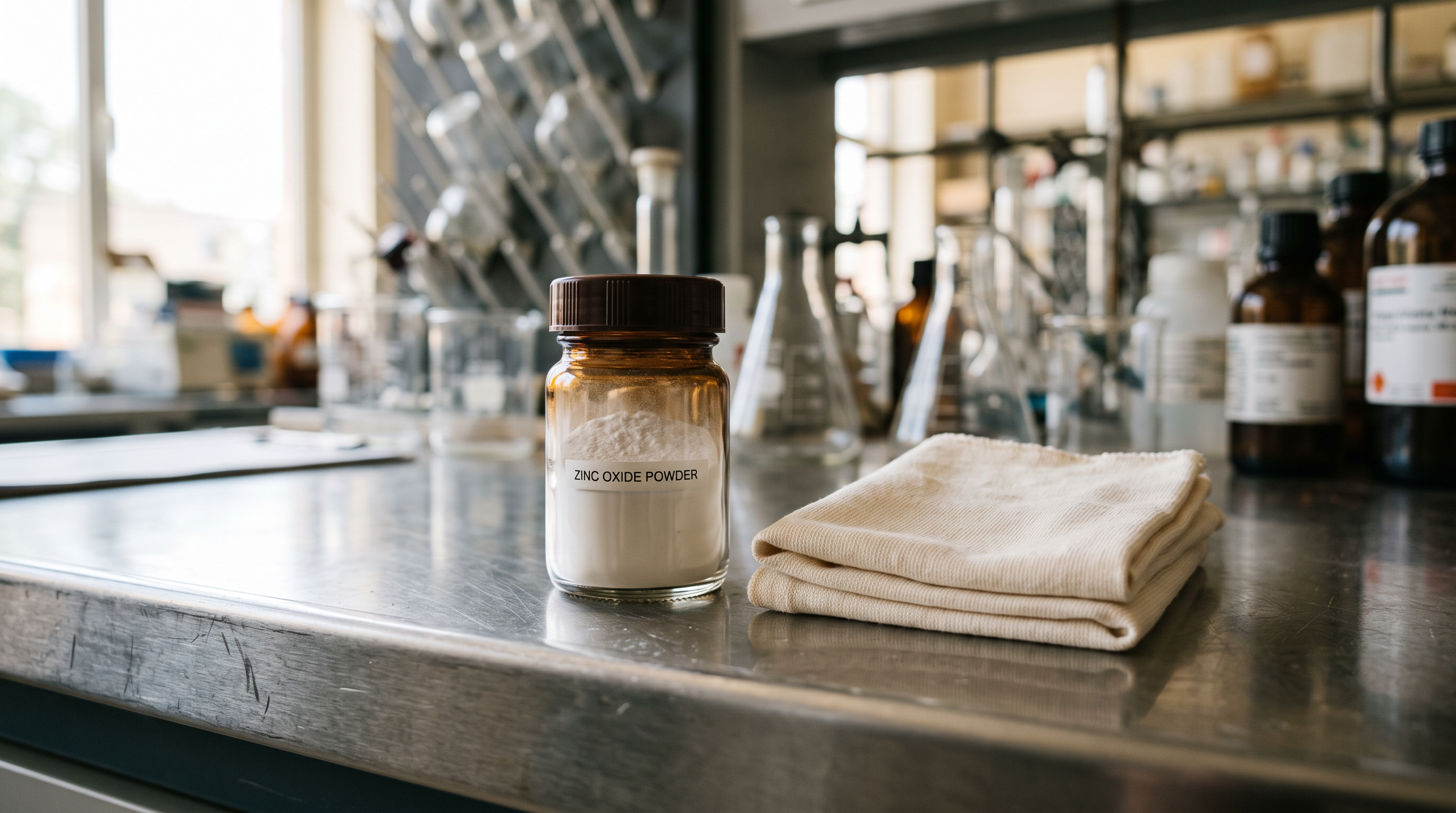
Zinc oxide sol gel finishes are applied to fabric in the finishing stage, typically via padding or exhaustion. The chemistry bonds to the fiber surface. When the fabric is new, it performs exactly as advertised. Third party testing by SGS in 2025 on a zinc oxide treated ramie cotton blend showed 99.3 percent bacterial reduction at AATCC 100. That is real. That is not greenwashing.
But the same test report showed something else: after 30 home washes, efficacy dropped to 96.2 percent. That sounds like a small decline, but bacterial reduction is logarithmic. A drop from 99.3 to 96.2 percent means the surviving colony count increased significantly. And that test used AATCC 61 2A simulation, which only models about 20 home laundry cycles.
The durability curve is not linear. It is steepest in the first 10 to 20 washes, then flattens. But the marketing page does not show you the curve. It shows you the peak.
Why does zinc finish efficacy degrade?
The problem is mechanical and chemical.
Zinc antimicrobial treatments sit on the fiber surface. They are not embedded in the polymer matrix like silver masterbatch in synthetic fibers. Every wash cycle does three things:
- Mechanical abrasion from tumbling and steel balls (or other garments) wears the finish away.
- High alkalinity detergents accelerate chemical degradation of the zinc oxide bond.
- Chlorine based cleaners attack the finish directly.
The gussets, waistbands, and seams are the first zones to lose protection. These are high friction areas where the coating wears fastest. If you have ever wondered why activewear smells fine everywhere except the waistband after six months, this is part of the answer.
Zinc pyrithione, a related chemistry used in some sportswear, is more stable in alkaline wash environments than silver ion treatments. But it is less effective against gram negative bacteria from day one. You are trading one limitation for another.
What does AATCC 100 actually test?
AATC 100 is the industry standard quantitative test for antibacterial finishes on textile materials. The method measures bacterial reduction by inoculating treated fabric with a known colony count, incubating for 24 hours, and counting survivors.
The test tells you how the fabric performs at the time of testing. It does not tell you how the fabric will perform after six months of use.
When durability matters, AATCC 100 is combined with laundering procedures like AATCC 61 or AATCC 135. A good supplier will test bacterial reduction at 0 washes, 25 washes, and 50 washes. A cheap supplier will test at 0 washes and stop there.
If your supplier's test report only shows initial performance, you do not have durability data. You have a snapshot.
What is the honest trade off here?
Surface applied zinc finishes are accessible. They work with natural and cellulosic fibers. They do not require masterbatch integration or polymer reformulation. They are cheaper than fiber integrated silver. And they are genuinely less toxic than triclosan, which was banned by the FDA from consumer soaps in 2016 but is still permitted in textiles under EPA jurisdiction.
The trade off is durability. If your customer washes their leggings twice a week, the antimicrobial claim is effectively gone in three to four months. The garment still works as a garment. It just does not work as advertised.
For a brand founder building non-toxic activewear, this creates a positioning problem. You cannot claim permanent antimicrobial protection if the finish degrades. But you also cannot position your product as "odor resistant for the first 25 washes" without sounding ridiculous.
The honest answer is to set expectations. Or to choose a different path entirely.
What are the alternatives to surface applied zinc?
There are three main routes:
Fiber integrated antimicrobials
Silver ion or zinc oxide can be embedded into the polymer melt before extrusion. This produces antimicrobial fibers, not antimicrobial finishes. The protection is distributed throughout the fiber cross section, not sitting on the surface. Durability testing shows these treatments can last 50 plus industrial washes.
The downside: fiber integration requires masterbatch, higher minimum order quantities, and precise manufacturing control. You are not padding a finish onto commodity fabric. You are specifying a custom fiber.
Natural fiber inherent properties
Wool, hemp, and some cellulosic fibers have inherent antimicrobial resistance due to fiber structure and natural chemistry. Merino wool's lanolin and moisture dispersion give it natural odor resistance without any finish. Hemp's lignin content offers mild antimicrobial activity.
The downside: performance is modest compared to treated synthetics. You are not getting 99 percent bacterial reduction from untreated hemp. You are getting "better than polyester," which is a low bar.
No antimicrobial claim at all
Some non-toxic activewear brands have dropped antimicrobial claims entirely. They position on material purity, not performance finishes. The argument: if you are using natural fibers that breathe, you do not need a chemical crutch to mask the odor problem that synthetic fabrics create.
This is a legitimate positioning choice. But it only works if your base fabric actually breathes. Organic cotton with bio based elastane can make this claim. Recycled polyester cannot.
What should a brand founder ask their supplier?
If you are sourcing fabric with zinc antimicrobial claims, here is what I would want to see:
- AATCC 100 test report at 0 washes and 25 washes minimum. If they only test at 0, walk away or negotiate for durability data.
- Test organism disclosure. AATCC 100 default organisms are Staphylococcus aureus (gram positive) and Klebsiella pneumoniae (gram negative). If the report only tests gram positive, the finish may underperform against the bacteria that actually cause body odor.
- Wash protocol details. Were the samples laundered per AATCC 61 (accelerated simulation) or AATCC 135 (home laundering)? What detergent was used? What water temperature? High alkalinity detergents degrade zinc finishes faster.
- Lot level testing. The phrase "we test every lot" means different things at different mills. Some mills test antimicrobial efficacy lot by lot. Some test only physical properties and assume chemistry consistency. Ask which tests are lot level.
- Reactivation guidance. Some antimicrobial finishes can be partially reactivated with heat. If the supplier claims this, get the protocol and the supporting test data.
What does this mean for positioning non-toxic activewear?
The consumer conversation around non-toxic activewear is evolving. Two years ago, "antimicrobial" was a feature. Now it is becoming a question.
Savvy buyers are asking: antimicrobial how? For how long? With what chemistry? The brands that can answer those questions with data, not marketing copy, will hold credibility.
If you are building a material story around zinc antimicrobial finishes, be specific about what the testing shows. Say "tested to 99 percent bacterial reduction after 25 home washes per AATCC 100" instead of "naturally antimicrobial." The first is defensible. The second is not.
If you are building a material story around natural fiber inherent properties, be specific about what those properties are. Hemp is naturally antimicrobial in a mild sense. Organic cotton is not. Do not conflate them.
The plastic-free activewear guide covers the broader material landscape. But the antimicrobial question is a chapter on its own.
What I would want to see in a supplier's lab report
If I were signing off on a zinc antimicrobial fabric for a non-toxic activewear line, the lab report would need:
- AATCC 100 bacterial reduction at 0, 25, and 50 wash cycles
- Test organisms: S. aureus and K. pneumoniae at minimum
- Wash protocol: AATCC 135 preferred, AATCC 61 acceptable with clear simulation equivalence noted
- Detergent type and pH documented
- Lot number and production date matched to shipment
- Third party lab accreditation (SGS, Bureau Veritas, Intertek, or equivalent)
If the supplier cannot provide this, the antimicrobial claim is not verified. It is marketing.
OHZEHN-TEX(TM) exists to help brands source fabric where the proof matches the positioning. But that is a longer conversation.
The short version: zinc antimicrobial finishes work. They just do not work forever. And if your hangtag does not say that, the returns room eventually will.
Sources
https://szoneierfabrics.com/what-ramie-fabric-antimicrobial-finish-adds-value-for-activewear-contractors/ https://www.jaceapparel.com/anti-microbial-apparel/ https://blog.qima.com/textile/aatcc-100-antimicrobial-fabric-test https://www.situbiosciences.com/product/aatcc-tm-100-antimicrobial-textile-test/ https://microbe-investigations.com/textile-services/textile-antibacterial/aatcc-100/ https://microbe-investigations.com/blog/aatcc-100-test-method/ https://www.alibaba.com/product-insights/fitness-apparel-with-antimicrobial-treatment-vs-untreated-fabric-for-odor-control-during-frequent-wash-cycles.html https://www.aprisportswear.com/blogs/guides-articles/silver-zinc-and-pfas-in-sportswear-what-you-should-know-before-you-buy https://www.nature.com/articles/s41598-022-22370-2 https://www.sciencedirect.com/science/article/abs/pii/S2352492822020153 https://www.beyondpesticides.org/resources/antibacterials/triclosan/fda-2016-decision-and-history https://scienceinsights.org/is-triclosan-banned-everywhere-its-legal-status/ https://sansansports.com/antimicrobial-fabric-treatments-sportswear-durability/ https://sustainably-chic.com/blog/sustainable-activewear/ https://www.qforquinn.com/blogs/news/best-sustainable-activewear-brands https://phys.org/news/2018-03-silver-nanoparticles-outand-threaten-human.html https://pubmed.ncbi.nlm.nih.gov/18031795/