You are 18 months from launching a performance line that will be judged on two questions your customer was not asking three years ago: What is in the fabric? Can you prove it?
Plant-based performance fabric is no longer a premium marketing story. It is a regulatory compliance path and a cost math decision. The question is whether you build for that reality now or retrofit in 2028 when the documentation requirements are mandatory and the bio-based supply is allocated to brands who locked contracts early.
What is plant-based performance fabric in 2026?
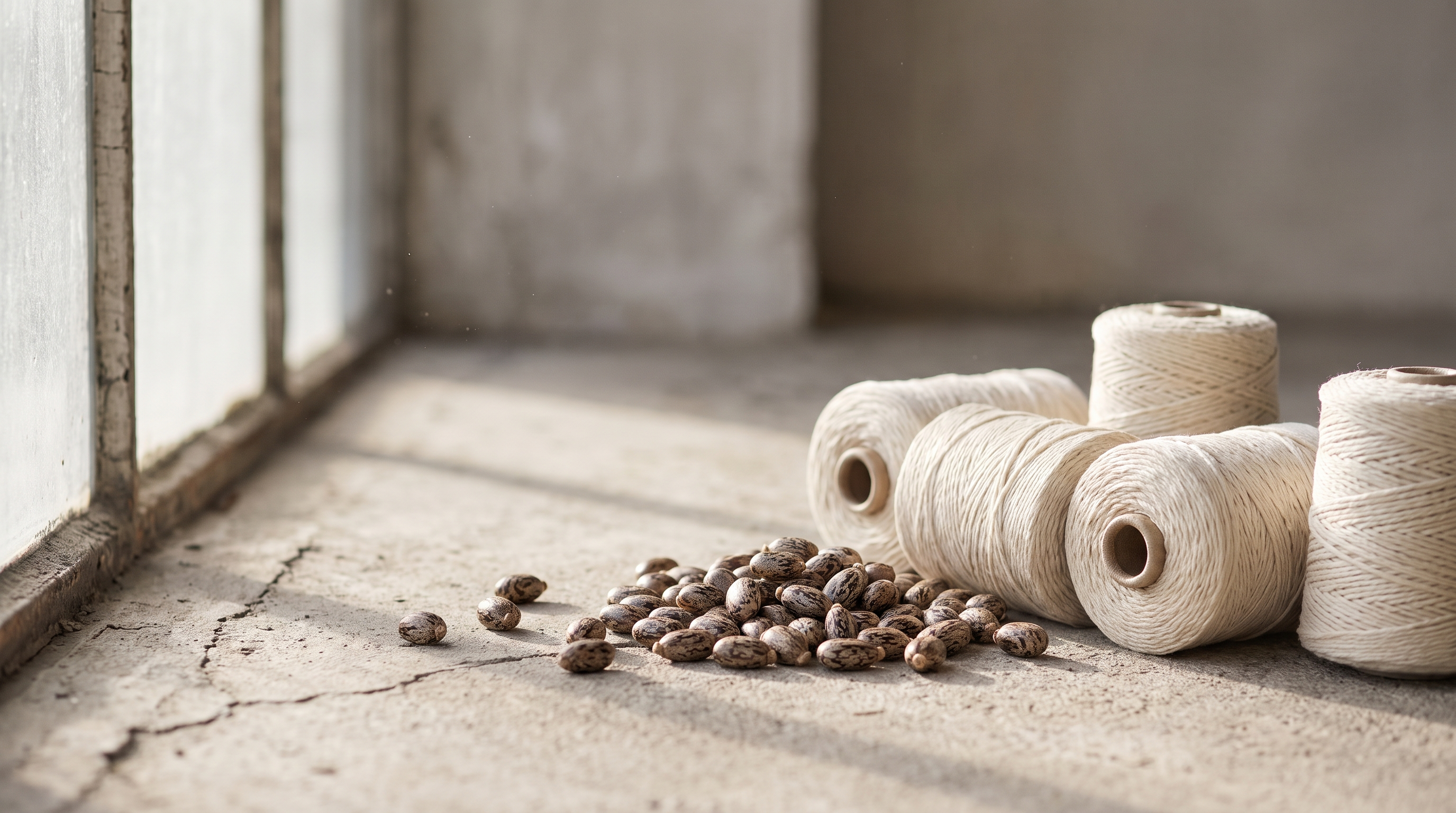
Bio-based nylon, also known as bio-polyamide, is a type of nylon produced from renewable sources, such as corn, sugar cane, castor oil, and other plant materials. It is a biodegradable and environmentally friendly alternative to traditional fossil fuel-based nylon with similar properties and functions.
The technical reality is simpler than the marketing implies. The bio-based nylon molecular structure is similar to that of petroleum-based nylon. Still, bio-based nylon offers improved sustainability by reducing dependence on crude oil, lowering greenhouse gas emissions and sometimes enhancing biodegradability, depending on the formulation.
For your product development team, this means the fabric performs the same. Upstream energy use is generally lower for bio-based processes depending on fermentation efficiency. At custom OEM facilities, bio-based and petrochemical nylons are spun side-by-side using shared spinning lines.
The decision is not about performance sacrifice. It is about cost, documentation, and timing.
What is your customer going to ask by 2027?
Three questions are converging:
1. Is this PFAS-free?
Sales prohibitions on most textile articles containing intentionally added PFAS took effect January 1, 2026 in Maine. Your customer in California, New York, Vermont, and Maine is now protected by state law. By 2027, that list grows.
2. Is this plastic-free?
Over 90% of the activewear on the market is built on polyester, a petroleum-based plastic. And while the industry has spent decades marketing polyester as a performance fabric, the science tells a different story. Polyester sheds microplastics with every wash and wear cycle. The plastic-free question is following the PFAS question. It is moving from niche to default.
3. Can you prove it?
A brand making sustainability claims without OEKO-TEX, GOTS, Bluesign, or B Corp certification is asking you to trust their word alone. That's not enough.
The third question is the one that separates brands with proof from brands with claims. For a comprehensive look at this category, see the plastic-free activewear guide.
Where is the regulatory floor moving?
The floor is moving up and to the left on every chart that matters to your sourcing team.
United States
Under AB 1817, the Safer Clothes and Textiles Act, California has already banned the manufacture, distribution, or sale of any new textile articles containing regulated PFAS above 100 ppm (measured as Total Organic Fluorine). That first threshold took effect on January 1, 2025. But the California AB 1817 PFAS textile ban doesn't stop there. Effective January 1, 2027, the allowable PFAS limit drops to 50 ppm TOF, cutting the permissible concentration in half.
In Washington, reporting requirements for apparel with intentionally added PFAS took effect January 2026. First reports are due January 2027. Apparel and accessories made from leather, natural textiles, synthetic textiles, or technical textiles may not contain intentionally added PFAS after January 1, 2027.
Starting in 2026, several states are poised to roll out similar PFAS prohibitions in textile articles, including Maine, Vermont, Rhode Island (starting in 2027), Colorado (starting in 2028), and Connecticut (for apparel, starting in 2028).
European Union
Water-resistant and non-stick coatings are already subject to the PFHxA restriction under REACH Annex XVII (effective October 2026 for textiles in clothing).
France Law No. 2025-188 with Decree no 2025-1376 bans the manufacture, import, export, and sale of PFAS-containing textiles, footwear, and waterproofing agents for consumer use, effective January 2026.
Denmark BEK No. 464 bans import and sale of clothing and footwear containing total fluorine levels at or above 50 mg F/kg, effective July 1, 2026.
ECHA's Socio-Economic Analysis Committee is expected to adopt its final opinion by the end of 2026. Both committees' opinions will then be formally submitted to the European Commission, which will propose a restriction for discussion and vote in the REACH Committee.
The regulatory trajectory is clear. The question is whether your 2027 line is designed to the 2027 floor or to the 2030 floor.
What is the cost math on plant-based performance fabric?
Here is where founders make decisions. The numbers below are hedged because input costs vary by feedstock, supplier, and volume commitment. But the structure is directional.
Raw material baseline
Recycled and bio-based nylons generally cost 20 to 60 percent more to manufacture than virgin nylon due to more complex sourcing, processing, and certification requirements. However, for brands prioritizing sustainability, this premium is often justified by the marketing value and regulatory alignment.
Despite strong growth prospects, high production costs remain a significant restraint. Bio-based nylon manufacturing involves complex extraction and polymerization processes that require substantial water and energy input. Compared to petroleum-based nylon, production costs were higher in 2025 and 2026, limiting adoption among cost-sensitive manufacturers.
Worked example: legging COGS
Assume your current petroleum nylon legging has a fabric COGS of $4.50 per unit. That includes yarn, knitting, dyeing, and finishing.
If you switch to bio-based nylon at the mid-range premium (30 percent), your fabric COGS moves to approximately $5.85 per unit.
If your current ASP (average selling price) is $78 and your gross margin is 62 percent, your COGS is approximately $29.64. A $1.35 increase in fabric cost moves your gross margin to approximately 60.6 percent.
The math:
- Current fabric COGS: $4.50
- Bio-based fabric COGS (30% premium): $5.85
- Delta: +$1.35 per unit
- Current total COGS: $29.64
- New total COGS: $30.99
- Current gross margin at $78 ASP: 62.0%
- New gross margin at $78 ASP: 60.3%
- Margin compression: 1.7 points
That is a 1.7 point margin compression on a single SKU. At scale, that is material. But it is not disqualifying.
Where the cost gap is narrowing
The bio-based nylon market size was valued at USD 1.41 billion in 2025, reflecting early but accelerating adoption across automotive, textiles, electronics, and consumer goods industries. The market is projected to grow to USD 1.69 billion in 2026, supported by rising environmental awareness, regulatory pressure to reduce carbon emissions, and technological advancements in bio-polyamide production.
Ongoing R&D is focused on improving the cost structure of bio-based nylons, optimizing polymerization processes, and enhancing the sustainability of raw material sourcing. Pricing trends are gradually becoming more competitive as production scales and supply chains mature.
The cost curve is moving. But it is moving incrementally, not dramatically.
Limited scale creates a structural price premium that does not disappear quickly. Price reductions are more likely from incremental scale gains, not sudden cost collapses.
Do not plan for price parity by 2028. Plan for a narrowing premium that rewards early adopters with supply allocation and documentation infrastructure.
What does proof look like at retail?
The market is splitting into two categories: performance with claims and performance with proof.
Performance with claims looks like this:
- "Made with sustainable materials"
- "Eco-friendly fabric"
- Recycled content percentage without third-party certification
- PFAS-free assertion without testing documentation
Performance with proof looks like this:
- OEKO-TEX Standard 100 certification on the finished garment
- Bluesign-certified supply chain
- GRS certification for recycled content with chain of custody
- Bio-based content percentage verified by ISCC or TUV
- Total organic fluorine testing below state thresholds with lot-level documentation
Third-party certifications are the most reliable way to verify sustainability claims. The key ones to know: OEKO-TEX STANDARD 100 tests every component of the finished garment for harmful chemical substances. A reliable baseline standard for any sustainable activewear claim.
The documentation layer is becoming the competitive advantage. New bio-based nylon alternatives cut the material's carbon emissions by 25% compared to conventional polyamide. That claim is only valuable if you can prove it with a third-party LCA or verified carbon accounting.
What about the performance question?
Founders ask whether bio-based nylon performs the same as petroleum nylon. The answer is yes.
A large global footwear brand sourced bio-based Nylon 11 for upper fabrics in trail running shoes. Working with their OEM, the brand achieved a 46% reduction in GHG emissions per kilogram of fabric produced, while maintaining strength and moisture-wicking properties equal to Nylon 6.
Studies indicate that the production of bio-based nylon can result in up to 40% lower greenhouse gas emissions compared to conventional nylon manufacturing. This reduction stems from both the renewable nature of the raw materials and optimized production processes.
The performance parity is real. The documentation is the differentiator.
What to do this quarter
- Audit your current PFAS exposure. Pull the technical data sheets for every fabric in your line. Identify which finishes contain intentionally added PFAS. Map those SKUs to the states where you sell.
- Request bio-based samples from two suppliers. Do not commit to volume yet. Get hand-feel samples and technical specs for PA11, PA610, or PA56 from at least two suppliers. Compare tensile strength, stretch recovery, and color uptake to your current petroleum baseline.
- Price the documentation layer. Ask your suppliers what third-party certifications they can provide. Get quotes for lot-level total organic fluorine testing. Build the documentation cost into your 2027 line COGS, not as a surprise in Q3.
- Model the margin impact. Run the math on three SKUs. What does a 25 percent fabric cost increase do to your gross margin at current ASP? What ASP increase would hold margin constant? Is your customer willing to pay that?
What to do in the next 12 months
- Lock a pilot commitment. Bio-based fibres show higher cost variance than petrochemical fibres with long-established supply chains. Unlike polyester or nylon, most bio-based fibres lack massive global scale. A pilot order with a capacity-constrained supplier establishes relationship priority for 2028 scale-up.
- Build your proof stack. By Q2 2027, you should have: OEKO-TEX or Bluesign certification on at least one bio-based SKU, bio-content verification from a recognized third party, and documented PFAS testing below the California 50 ppm threshold.
- Train your marketing team. The claims they can make in 2027 are constrained by what your documentation supports. If you cannot prove it, you cannot say it. That is a legal conversation, not a creative one.
- Watch the EU timeline. ECHA's Socio-Economic Analysis Committee is expected to finalize its opinion by the end of 2026. ECHA will transmit both committee opinions to the European Commission. If you sell into Europe, your 2028 line needs to be designed to the EU floor, not the US floor.
The brands that win in 2028 are not the ones with the best sustainability story. They are the ones with the best documentation. OHZEHN-TEX(TM) exists to provide that proof layer at the material level, so the claims you make at retail are the claims you can defend in due diligence.
The cost math is converging. The regulatory floor is rising. The question is not whether to switch. It is whether to switch now, when supply is available and documentation infrastructure can be built, or later, when both are constrained.
Sources
https://www.bluesign.com/pfas-in-clothing https://www.certivo.com/blog-details/california-ab-1817-pfas-textiles-ban-compliance-requirements-manufacturers https://www.morganlewis.com/pubs/2024/11/new-york-and-california-bans-on-pfas-in-textiles-and-apparel-begin-january-1-2025 https://www.certivo.com/blog-details/eu-pfas-restriction-under-reach-what-manufacturers-must-know-before-2027 https://www.arnoldporter.com/en/perspectives/advisories/2026/03/echa-committees-advance-broad-pfas-restriction-under-reach https://cms.law/en/deu/legal-updates/support-for-eu-wide-pfas-restriction-with-targeted-derogations-what-happens-next https://www.fortunebusinessinsights.com/bio-based-nylon-market-113757 https://www.giiresearch.com/report/fbs1916451-bio-based-nylon-market-size-share-growth-global.html https://www.marketresearchintellect.com/product/bio-based-nylon-market/ https://www.fibre2fashion.com/market-intelligence/texpro-textile-and-apparel/textile-guide/11397/bio-based-fibres-commercial-viability-textile-industry https://szoneierfabrics.com/is-nylon-cheap-to-manufacture/ https://szoneierfabrics.com/what-is-bio-based-nylon-emerging-sustainable-alternatives/ https://www.bccresearch.com/custom-market-research/bio-based-nylon-market-industry-analysis.html https://news.sustainability-directory.com/fashion/performance-apparel-shifts-to-bio-based-nylon-and-elastane-cutting-fossil-fuel-use/ https://www.flexfeng.com/blog/what-makes-biobased-nylon-a-sustainable-choice https://everyrep.com/best-non-toxic-activewear-brands/ https://www.aprisportswear.com/blogs/guides-articles/the-best-sustainable-activewear-brands-in-2026-a-no-greenwash-guide