You are 18 months from a product decision that will either future-proof your materials story or leave you scrambling through supplier audits when the regulatory floor moves again. The decision: whether to switch your petroleum-based nylon to bio-based nylon before the window closes.
The category is plant-based performance fabric. The math is more favorable than it was in 2024. But the window is narrowing.
The category in 24 months
The global bio-based nylon market is projected to grow from $1.69 billion in 2026 to $7.77 billion by 2034, at a CAGR of 20.80%. That growth is not evenly distributed. The automobiles segment dominates with a 34.91% share in 2026, driven by demand for lightweight, durable, and eco-friendly materials. Bio-based nylon's superior strength-to-weight ratio and environmental profile make it suitable for both interior and under-the-hood applications.
Textiles and apparel lag behind automotive. Apparel has emerged as the leading segment for bio-based fibre adoption. Home textiles represent one of the most commercially challenging, but strategically important, frontiers for bio-based fibres. Compared to apparel, the segment is more volume-intensive, cost-sensitive, and performance-driven, which slows adoption.
This matters for your category math. Automotive buyers can absorb a price premium because they are already at scale and can spread incremental cost across high-ASP vehicles. Apparel buyers cannot. Bio-nylons are still niche due to higher cost and limited availability, making them ideal for capsule collections or luxury eco-line extensions.
But that is changing. Lululemon, the largest activewear brand by nylon volume in North America, made its first equity investment in bio-based materials in 2021. Lululemon announced a multi-year collaboration with Genomatica to bring renewably-sourced, bio-based materials into lululemon's products. This represents lululemon's first-ever equity investment in a sustainable materials company and Genomatica's largest partnership within the retail industry. Together, the two companies will create a lower-impact, plant-based nylon to replace conventional nylon, which is the largest volume of synthetic material currently used to make lululemon products.
By 2028, the category leader will have moved a meaningful portion of its nylon SKUs to bio-based feedstocks. The question for you: what does it cost to follow, and what does it cost to wait?
What your customer is going to ask
Your customer is not going to ask for bio-based nylon by name. They are going to ask adjacent questions that lead there:
- "Is this made with petroleum?"
- "Does this contain PFAS?"
- "Is this plastic-free?"
These are not the same question. But the customer conflates them. And increasingly, the regulatory floor conflates them too.
As the health and environmental risks of PFAS become more widely recognized, governments worldwide are enacting stricter regulations to limit or ban their use in textiles. In 2026 alone, new PFAS restrictions took effect across multiple U.S. states and European countries, with additional deadlines approaching throughout the year.
The consumer conversation on TikTok and Instagram is moving faster than the regulatory conversation. One creator notes: "Polyester has its place in fashion, but it's not inherently better or more sustainable than natural fibers. Often companies are trying to sell you polyester over natural fibers."
The creator commentary matters because it shapes what your customer Googles before checkout. If your product page says "nylon," and the first three search results say "nylon is plastic," you have a conversion problem that no certification can solve.
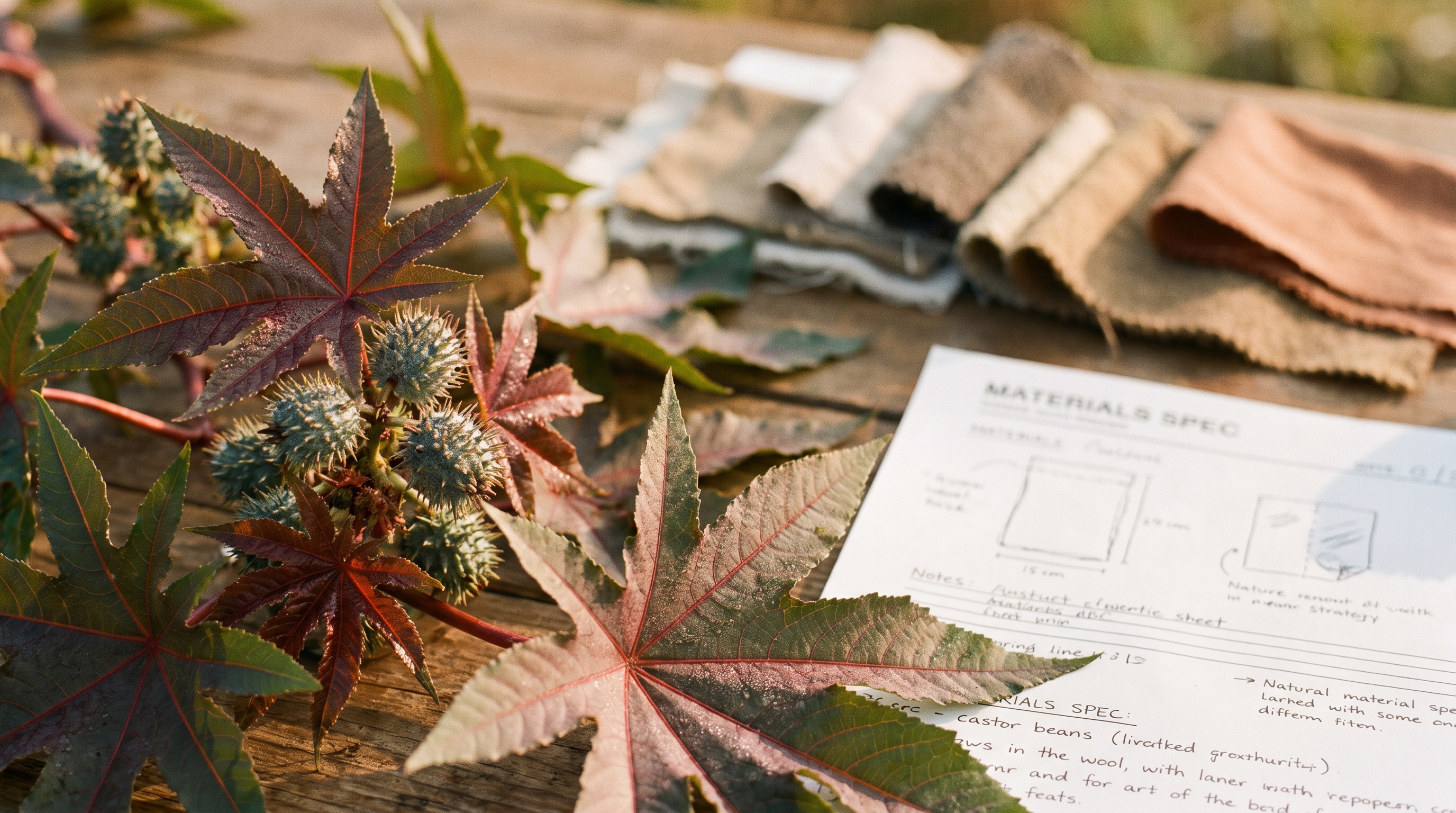
Bio-based nylon solves part of this problem. PA11, the most commercially available bio-based nylon for apparel, is synthesized from castor beans, a renewable feedstock that thrives on marginal land unsuitable for food crops. From a 2026 ESG perspective, this origin allows manufacturers to decouple material procurement from fossil-based carbon volatility.
The cost math
Here is the math as of Q2 2026.
Petroleum nylon (Nylon 6) landed cost: In January 2026, Nylon prices in China were quoted at $1,455/MT (FOB), while the USA saw significantly higher landed costs at $1,540/MT (CIF). Virgin nylon ranges from £1.70 to £2.00 per kg, recycled options are cheaper. Nylon 6 used in moulding is around £1.45 to £1.75 per kg.
Converted to USD at current exchange, conventional Nylon 6 for apparel applications lands at approximately $2.00 to $2.50 per kg at scale.
Bio-based nylon (PA11) landed cost: As of May 2026, virgin PA12 from leading European suppliers lands in Delhi at roughly INR 4,200 to 4,800 per kilogram inclusive of GST and customs. Virgin PA11 lands at INR 6,800 to 7,500 per kilogram, still a premium, but down from the 2.5x multiple we saw in 2022.
Converted to USD, PA11 lands at approximately $8.00 to $9.00 per kg in Asian production markets. The premium is approximately 3.5x to 4x conventional nylon.
What this means for your COGS:
Assume you are making a legging with a fabric COGS of $4.50 at current petroleum nylon prices. The nylon component is roughly 60% of fabric cost, or $2.70.
Switch to PA11 at 4x the material cost:
- Nylon component rises from $2.70 to $10.80
- Fabric COGS rises from $4.50 to approximately $12.60
- Total garment COGS rises from $11.00 to approximately $19.10
At a current ASP of $98, your gross margin drops from 89% to 80%. At an ASP of $68 (mid-market), your gross margin drops from 84% to 72%.
This is not viable for a full SKU transition today. But the math changes if:
- You blend PA11 with conventional nylon or recycled nylon at a 30/70 ratio. Blended fabric COGS rises to approximately $6.90. Gross margin impact: 3 to 5 points.
- You position the SKU as a premium tier with a $15 to $20 ASP lift. Gross margin impact: neutral to positive.
- You wait for scale. Limited scale creates a structural price premium that does not disappear quickly. Price reductions are more likely from incremental scale gains, not sudden cost collapses.
The third option is the riskiest. By 2028, the brands that moved early will have locked in supply agreements and amortized the learning curve. The brands that waited will be competing for the same capacity at spot prices.
Where the regulatory floor is moving
United States
Washington State recently amended its regulations to ban intentionally added PFAS in apparel and accessories made from leather, natural textiles, synthetic textiles, or technical textiles. Those prohibitions will become effective on January 1, 2027.
In Maine, a broad ban on unnecessary uses of PFAS is taking effect across products such as clothing, cleaning products, cookware, dental floss, children's products, food packaging, menstrual products, personal care products, ski wax, and textiles. This follows Minnesota's similar law and aligns with both states' plans to ban all unnecessary PFAS uses by 2032.
California's total organic fluorine threshold drops from 100 ppm to 50 ppm in January 2027.
On January 1, 2028, Connecticut will implement an unconditional ban on the manufacture, sale, offering for sale or distributing for sale of apparel containing intentionally added PFAS.
European Union
The European Chemicals Agency (ECHA) aims to complete its scientific evaluation of the proposed EU-wide restriction on per- and polyfluoroalkyl substances (PFAS) by the end of 2026.
From January 1, 2030, the manufacture, import, export and placing on the market of any textile product containing perfluoroalkylated and polyfluoroalkylated substances are prohibited.
Some EU member states aren't waiting for ECHA's universal restriction. France (from January 1, 2026): PFAS banned in cosmetics, textiles for clothing, and ski wax. This is already in force. Denmark (from July 1, 2026): PFAS banned in clothing, footwear, and waterproofing agents, with a threshold of 50 mg total fluorine per kg.
What this means for your product
PFAS and nylon feedstock are distinct regulatory categories. Bio-based nylon does not automatically mean PFAS-free. PA11 can still be finished with PFAS-containing DWR treatments.
But the regulatory floor is converging. A brand selling into California, Washington, Maine, France, and Denmark in 2027 will need:
- PFAS-free finishes (C0 DWR or equivalent)
- Documented supply chain verification
- A material story that anticipates the next wave of restrictions
Bio-based nylon is not required. But bio-based nylon with PFAS-free finishing is a defensible position that survives multiple regulatory cycles. Petroleum nylon with C0 DWR is a compliant position that requires re-explanation every time the consumer conversation shifts.
What to do this quarter
- Audit your nylon SKUs by volume. Identify the three to five SKUs that account for 60% of your nylon yardage. These are your conversion candidates.
- Request PA11 pricing from your fabric mill. Ask for three scenarios: 100% PA11, 30% PA11 blend, and 50% PA11 blend. Get landed cost to your distribution center, not FOB.
- Model gross margin impact at your current ASP and at a $15 premium. If the premium scenario is margin-neutral, you have a viable path.
- Map your state and country exposure. If you sell into California, Washington, Maine, New York, France, or Denmark, you are already subject to PFAS disclosure or prohibition timelines. Your compliance window is 18 to 36 months, not five years.
What to do in the next 12 months
- Lock in a pilot order. 2,000 to 5,000 units of a single SKU in PA11 or a PA11 blend. This gives you production learnings without full-line exposure.
- Test consumer response at the premium price point. Run a controlled A/B on your site with identical styling: one at current ASP in conventional nylon, one at $15+ premium in bio-based nylon with explicit "plant-based performance fabric" messaging. Measure conversion and return rate.
- Engage your PR and social strategy now. The brands that win in this category are the brands that own the conversation before the regulation forces it. If your customer first hears about bio-based nylon from a TikTok creator calling out your competitor, you are already behind.
- Build the certification stack. PA11 from a supplier like Arkema (Rilsan) carries bio-based certifications. In one recent example, Arkema was capable of reducing the carbon footprint of biobased Rilsan 11 by around 70% compared to traditional nylon production, achieving less than 2 kg CO2e/kg. Stack that with a PFAS-free finish certification and you have a materials story that survives due diligence.
Platforms like OHZEHN-TEX exist to help founders build exactly this stack: verified, lot-tested, regulator-ready. If your material story needs proof before your next raise or acquisition conversation, the time to build that proof is now.
The cost math on bio-based nylon is not yet favorable at full-line scale. But the window to move before your customer asks, and before your regulator requires, is closing faster than the price gap.
Sources
https://www.morganlewis.com/pubs/2026/01/state-regulation-of-pfas-in-consumer-products-continues-to-gain-momentum-in-2026 https://www.bluesign.com/pfas-in-clothing https://www.saferstates.org/resource/2026-analysis-of-state-policy-addressing-toxic-chemicals-and-plastics/laws-going-into-effect-in-2026/ https://pfas.foxrothschild.com/2026/02/ringing-in-2026-with-a-look-at-newly-effective-state-regulation-of-pfas-in-products/ https://www.fortunebusinessinsights.com/bio-based-nylon-market-113757 https://www.giiresearch.com/report/fbs1916451-bio-based-nylon-market-size-share-growth-global.html https://www.fibre2fashion.com/market-intelligence/texpro-textile-and-apparel/textile-guide/11397/bio-based-fibres-commercial-viability-textile-industry https://szoneierfabrics.com/why-do-luxury-brands-use-nylon/ https://echa.europa.eu/-/echa-announces-timeline-for-pfas-restriction-evaluation https://www.ul.com/news/eu-sets-pfas-restrictions-consumer-products https://tocco.earth/article/which-eu-pfas-ban-applies-to-your-brand https://textileus.com/nylon-11/ https://www.autoabode.com/blog/pa12-vs-pa11-sls-material-guide-india https://www.bio-sourced.com/biobased-polyamides/ https://starkefabric.com/why-are-fabric-raw-material-prices-rising-in-2026-7-key-factors-every-textile-buyer-should-know/ https://www.goodgarms.com/articles/nylon-vs-polyester https://www.genomatica.com/news-content/lululemon-partners-with-genomatica-on-plant-based-nylon/ https://www.businessoffashion.com/news/sustainability/lululemon-invests-in-sustainable-materials-company-genomatica/ https://www.thecooldown.com/green-home/greenwashing-red-flags-online-shopping-tiktok/ https://ohzehn-tex.com/plastic-free-activewear/