Non-toxic activewear is the fastest-growing search term in conscious apparel, and few brands ride that wave more visibly than Vuori. The California-born label wraps its marketing in coastal sunlight and climate optimism. But when you pull the spec sheets from its own product detail pages, a different story emerges. This is an audit of what the brand publishes versus what its products actually contain.
The claim
Vuori's Impact page opens with a statement repeated across its marketing channels. The brand's Our Impact page states that "we believe businesses have the power to make real, meaningful progress in securing a low-climate future." The same page references a partnership with CleanHub to remove plastic waste from coastal communities and promotes its Vuori Preferred Fibers program.
On its Climate Label page, Vuori reinforces this positioning. The brand aims for "a 42% absolute reduction in our GHG emissions across Scope 1 + 2" and "a 48% per-unit reduction in our GHG emissions across our Purchased Goods & Services."
The framing is clear: Vuori positions itself as a brand dedicated to environmental progress.
The product page
Vuori's bestselling legging, the Daily Legging, lists its fiber content on the brand's own product detail page and through third-party retailers like The Shop at Equinox:
- BreatheInterlock fabric: 72% polyester, 28% elastane
Multiple retailers confirm this composition. MCU Sports lists the same specification: "Fabric 72% Polyester, 28% Elastane." The Sports Edit confirms: "72% Polyester, 28% Elastane."
The brand's Design Philosophy page details its proprietary fabrics:
- DreamKnit: "Made from 89% recycled materials" (polyester and elastane)
- BlissBlend: "Made with 75% recycled materials" (recycled polyamide and elastane)
- VCycled: "crafted partially from recycled materials like plastic bottles"
Polyester. Polyamide. Elastane. These are petroleum-derived plastics. The recycled versions are still plastic. Vuori's own design philosophy page confirms that its "Preferred Fibers" are defined as "those that have reduced greenhouse gas emissions per kilogram of material compared to their conventional equivalent." The definition does not address microplastic shedding, chemical finishes, or end-of-life biodegradability.
The gap
Vuori markets a "healthy planet" identity while selling activewear composed almost entirely of synthetic plastic fibers. Here is the math:
- The Daily Legging contains 72% polyester + 28% elastane = 100% synthetic plastic
- The DreamKnit Jogger contains 89% recycled polyester + 11% elastane = 100% synthetic plastic
- The BlissBlend fabric is 75% recycled polyamide + 25% elastane = 100% synthetic plastic
Vuori's Impact page states that "approximately 56% of our total fabric spend is made with Vuori Preferred Fibers." That sounds significant until you realize that recycled polyester qualifies as a "preferred fiber" under Vuori's internal definition. The remaining 44% of fabric spend is presumably virgin synthetic or non-preferred materials.
The brand's Climate Label certification has expired. According to The Change Climate Project, "Vuori's certification has expired. They may be continuing their climate work in other ways, but they are no longer meeting the requirements in the The Climate Label Certified Standard."
This creates a specific gap: the brand's most prominent third-party climate certification is no longer active, yet marketing pages still reference the certification framework.
Third-party ratings
Good On You, the most widely cited sustainability rating platform for apparel, gives Vuori an overall rating of "Not Good Enough." The platform's analysis notes several concerns. First, "there's no evidence it takes action to minimise its packaging, which is a driver of plastic waste." Second, "there's no evidence it's taking meaningful action to reduce or eliminate hazardous chemicals in manufacturing." Third, the brand "sources its final stage of production from countries with extreme risk of labour abuse."
A comparative analysis published on Wear Bonta notes that "Vuori does not present a brand-wide third-party purity framework like OEKO-TEX Standard 100 across its entire fabric assortment." The analysis continues: "Individual product pages typically highlight fabric percentages, performance benefits, and whether recycled fibers are used, but they do not consistently disclose fabric-level certifications, finishing chemistries, or restricted-substance details."
Eco-Stylist observes that "Vuori's business model benefits from a sustainable 'halo' effect whereby it seems to have built a reputation for themselves around eco-consciousness, being in touch with nature, and environmentalism. However, actionable sustainability efforts seem to be relatively modest."
Commons Earth notes that "55% of their fabrics are made with lower impact fibers, including GOTS-certified organic cotton and GRS-certified recycled polyester." However, the same analysis notes that Vuori "does not offer repair services or a warranty" and "Commons could not find information on any take back programs."
The microplastics question
Recycled polyester is often positioned as the sustainable choice. But the shedding data tells a different story.
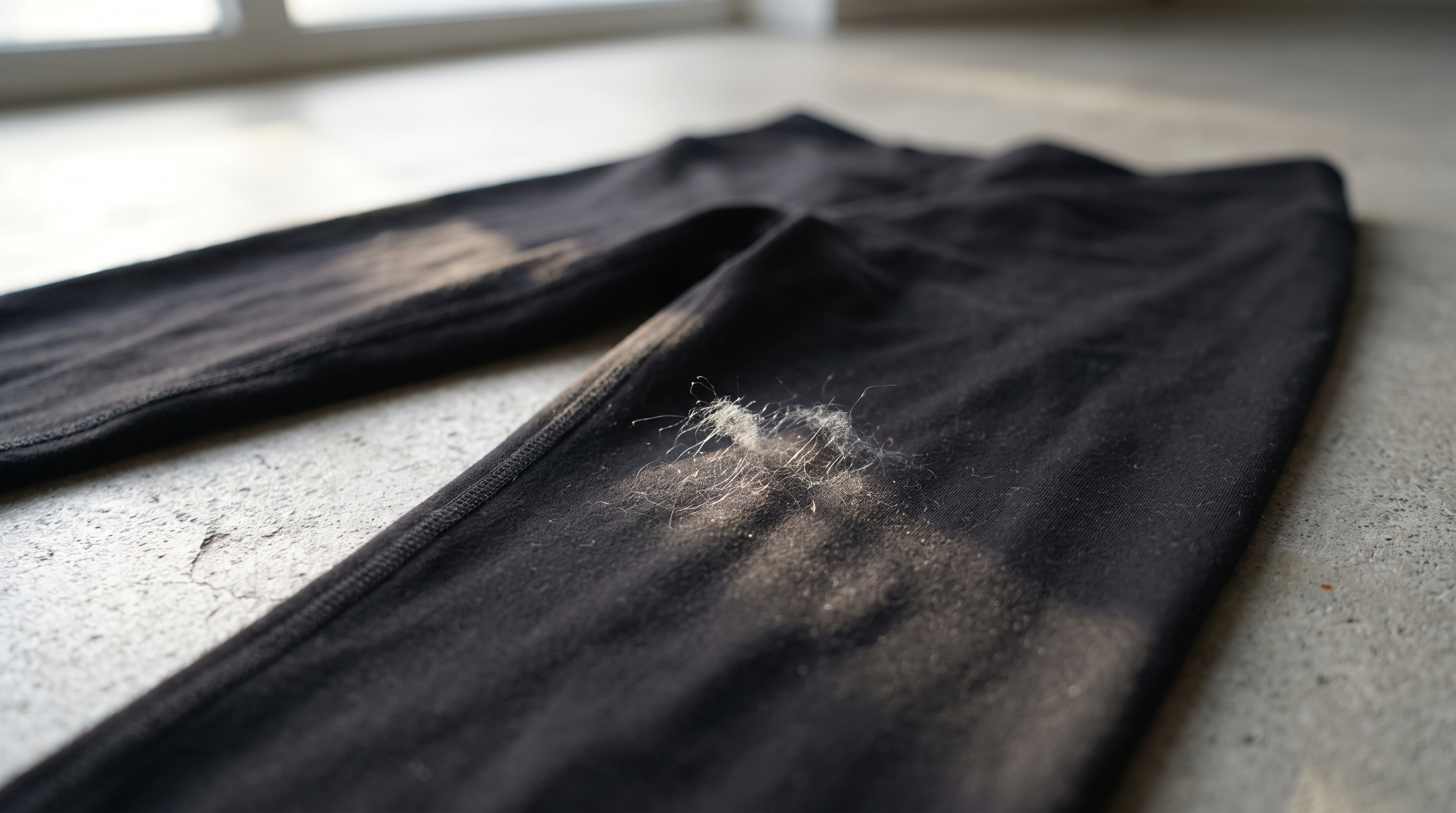
A December 2025 report from the Changing Markets Foundation found that recycled polyester released an average of 55% more microplastic particles during washing compared to virgin polyester. The research, conducted by the Microplastic Research Group at Cukurova University in Turkey, also found that particles shed from recycled fabrics were nearly 20% smaller, meaning they spread farther and penetrate biological tissue more easily.
According to coverage of the study, "a single wash cycle can release up to 900,000 microplastic fibers." The study tested garments from five globally recognized brands, finding that recycled polyester released an average of 12,430 microfibers per gram of fabric, compared to 8,028 microfibers per gram from virgin polyester.
Peer-reviewed research published in Environmental Science and Technology found that polyester fleece fabrics shed thousands of fibers per wash cycle. A more recent study on mechanically recycled textiles found that fabrics with fibers recycled two or three times released 4.3-fold and 6.2-fold more microplastic fibers than primary virgin polyester, respectively.
Vuori's marketing does not disclose microfiber shedding data. The brand does not appear to publish wash-cycle shedding tests or offer guidance on reducing fiber release during laundering.
What other brands in the category are doing
Three comparators show different approaches to the same market:
Patagonia completed a full PFAS phase-out across all products in Spring 2025. According to Patagonia's own PFAS page, "For the Spring 2025 season and beyond, 100% of our new products are made without intentionally added PFAS." The brand publishes detailed supply chain information for every product on its website. Better Trail notes that "by fall 2025, it had nearly eliminated virgin polyester and nylon, using 98% recycled polyester and 94% recycled nylon across its products." The brand also operates a Worn Wear repair and resale program.
Girlfriend Collective uses recycled polyester in an SA8000-certified factory and operates a ReGirlfriend take-back program. According to Good On You, the brand rates "Good" overall. The brand's About page states: "All our recycled fabric is certified Standard 100 by OEKO-TEX, the world's leader in testing fabrics to regulate harmful substances." The brand also confirms: "How do we achieve the sweat-wicking property of our leggings, tops, and bras without applying PFAS? Simple. Recycled polyester is naturally sweat-wicking."
Q for Quinn, as profiled by Q for Quinn's sustainable activewear guide, holds GOTS certification and manufactures organic cotton activewear processed without harmful dyes, formaldehyde, or PFAS. The brand offers dye-free options for sensitive skin.
The distinction matters. Patagonia and Girlfriend Collective pair recycled content with specific third-party certifications on chemical safety. Q for Quinn has moved to non-plastic base fibers entirely. Vuori's "Preferred Fibers" program is internally defined and does not appear to carry independent verification of chemical safety or shedding metrics across its full product line.
What a brand founder should ask
If you are sourcing performance fabric for an activewear line and want to avoid the gap between marketing and product spec, here is a practical checklist:
- What is the fiber composition by weight? Ask for the exact breakdown. "Recycled content" is not a fiber type. Polyester is still plastic whether it comes from a bottle or a barrel.
- Is the fabric OEKO-TEX Standard 100 certified? This tests the finished product for harmful substances. If the answer is "some styles" or "our supplier is certified," ask for the certificate number for the specific fabric you are buying.
- Does the fabric carry any PFAS-based finishes? Water repellency, stain resistance, and some antimicrobial treatments may use PFAS chemistry. Ask for a third-party test report or a written statement that the fabric is PFAS-free.
- What is the microfiber shedding rate? Ask if your supplier has tested the fabric under ISO 4484-1:2023 or a comparable protocol. If not, ask why. The Changing Markets Foundation study shows this data matters.
- Is the recycled polyester post-consumer or post-industrial? Post-consumer recycled content (from used textiles or consumer plastic bottles) has a different supply chain and environmental story than post-industrial scrap (factory waste never worn or used).
- Can you provide chain-of-custody documentation? GRS (Global Recycled Standard) certification includes transaction certificates that trace recycled content through the supply chain. Vuori's design philosophy page notes it is "certified by IDFL" to several Textile Exchange standards, including GRS. Ask for the same from your suppliers.
- What finishes are applied after knitting or weaving? Softeners, anti-odor treatments, and moisture-wicking finishes are often applied in the finishing stage. Ask what chemistry is used and whether it is disclosed to the end consumer.
- Is there a take-back or repair program? Brands like Patagonia (Worn Wear) and Girlfriend Collective (ReGirlfriend) operate circularity programs. Vuori does not appear to offer a comparable service.
For a deeper look at how fiber content and finish chemistry intersect with non-toxic claims, see the plastic-free activewear guide.
A note on framing
This audit does not suggest that Vuori is making false claims. The brand's marketing language is carefully hedged. "We believe businesses have the power to make real, meaningful progress" is a values statement, not a product spec. "Vuori Preferred Fibers" is an internal classification, not a third-party certification. The brand's Climate Label page references targets, not current achievements.
The gap is between positioning and product reality. Vuori sells polyester activewear. That activewear sheds microplastic fibers. The brand's Climate Label certification has lapsed. Third-party raters give it a "Not Good Enough" score on environmental action. None of this contradicts the brand's published claims. It does, however, complicate the healthy-planet narrative.
For brand founders building in this space, the question is whether your material story can hold up to the same audit. OHZEHN-TEX works with brands that want their product pages and their marketing pages to say the same thing.
What the product page says is what the customer actually wears.
Sources
https://vuoriclothing.com/pages/impact https://vuoriclothing.com/pages/the-climate-label https://vuoriclothing.com/products/womens-daily-legging-black https://vuoriclothing.com/pages/design-philosophy https://shop.equinox.com/products/vuori-daily-legging-1 https://www.mcusports.com/shop/women/women-bottoms/vuori-womens-daily-legging/ https://thesportsedit.com/products/vuori-daily-legging-black https://explore.changeclimate.org/brand/vuori https://directory.goodonyou.eco/brand/vuori https://wearbonta.com/blogs/news/bonta-apparel-vs-vuori-a-comparative-analysis-of-non-toxic-fabric-purity-standards-1 https://www.eco-stylist.com/is-vuori-fast-fashion/ https://brands.thecommons.earth/brand-rating/5/vuori https://changingmarkets.org/report/spinning-greenwash/ https://www.ncbi.nlm.nih.gov/pmc/articles/PMC5766707/ https://www.ncbi.nlm.nih.gov/pmc/articles/PMC12825150/ https://www.patagonia.com/our-footprint/pfas.html https://bettertrail.com/sustainability/patagonia https://directory.goodonyou.eco/brand/girlfriend-collective https://girlfriend.com/pages/about-us https://www.qforquinn.com/blogs/news/best-sustainable-activewear-brands https://ohzehn-tex.com/plastic-free-activewear/