I have stood at the stenter frame watching a C0 DWR bath run, knowing that the marketing page would say "PFAS-free" and that the bench tests would eventually tell a different story.
The story is not about safety. The C0 finish is safer. The story is about what happens six weeks after the garment ships, when the first round of returns starts coming back and the product team asks why the "water-resistant" leggings are wetting out.
What the marketing page says
PFAS-free clothing is a genuine regulatory and health improvement. The language is everywhere now: "fluorine-free," "C0 DWR," "no forever chemicals." Brands from Patagonia to Adidas have publicly committed to removing PFAS from their supply chains. bluesign, one of the strictest chemical management systems in textiles, now requires all approved items to be free from intentionally added PFAS as of January 2025.
The marketing is accurate. C0 DWR uses hydrocarbon-based chemistry instead of fluorinated compounds. It does not contain PFOA, PFOS, or the shorter-chain PFAS found in C6 finishes. For brands selling into California, New York, or the EU, this is not optional. Multiple PFAS bans took effect in January 2026, with more coming in 2027.
The product page will say the jacket beads water. That part is true.
What actually happens on the line
Here is the part that does not make it to the marketing brief.
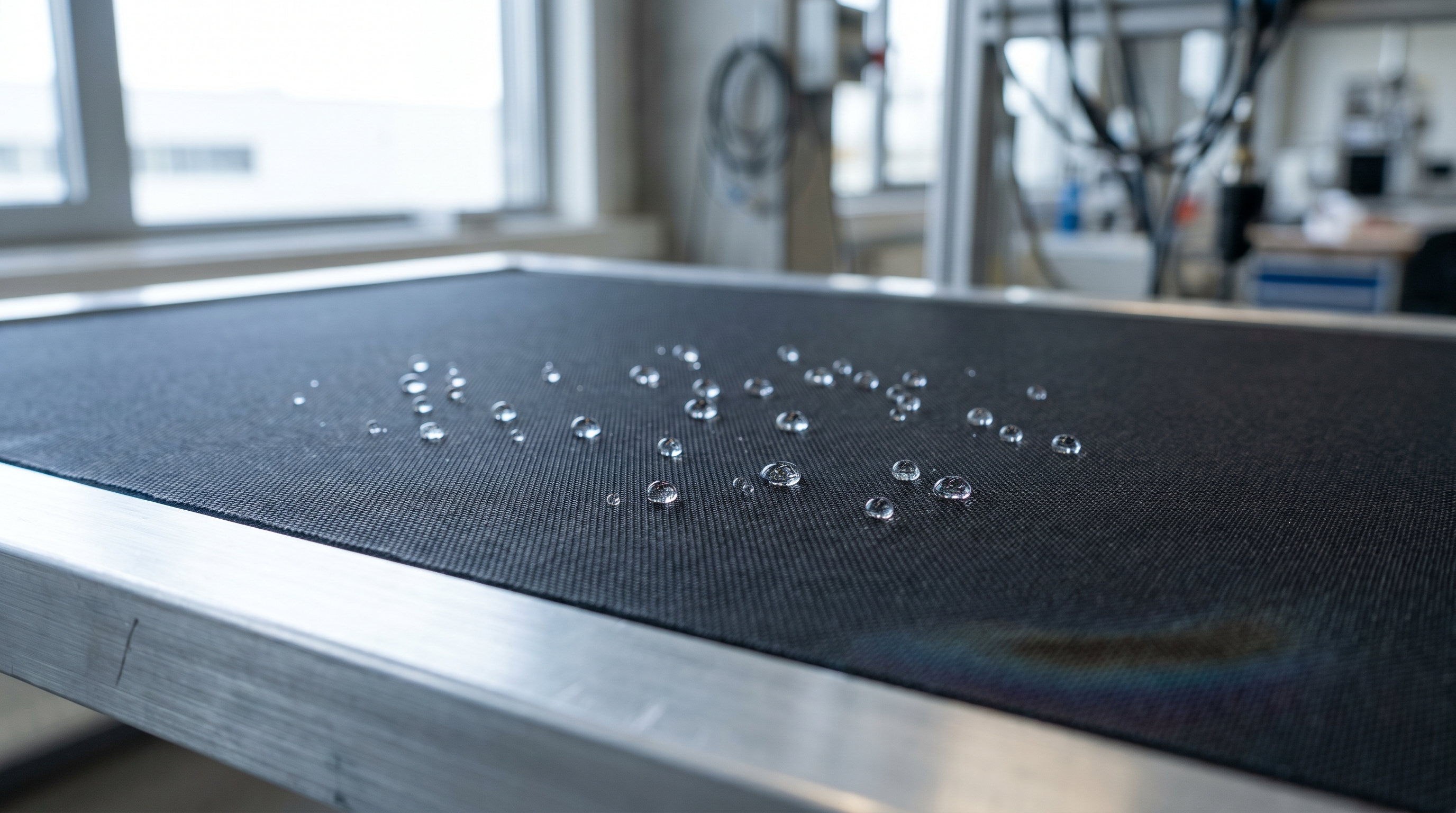
C0 DWR achieves excellent water repellency. When new, most fluorine-free treatments bead water effectively. In controlled wash-durability testing, top-tier C0 formulations now maintain effective water repellency for 15 to 25 wash cycles before a refresh is needed, compared to 20 to 30 for legacy C6 coatings. The gap has narrowed substantially since early C0 formulations.
The problem is oil.
The most frequently cited performance gap relates to oleophobicity: the ability to repel oils. This is a property inherent in fluorinated chains that the waxy, non-fluorinated C0 alternatives struggle to replicate with the same efficacy. A primary drawback of C0 compared to its C6 and C8 counterparts is its inability to repel oil. While water droplets will bead up and roll off the fabric surface, oily substances will leave stains on the garments.
In activewear, this is not an abstract problem. The oil is sebum. It is body lotion. It is the sunscreen your customer applied before their run. It is the cooking oil that splattered during meal prep before yoga class.
C6 offers moderate oil repellency, while C0 provides limited or no oil protection. If your product regularly comes into contact with oils, lotions, or heavy abrasion, this is an important consideration.
When I have seen this on the floors I have worked, the sequence is predictable. The fabric passes AATCC 22 (the spray test for water repellency) out of the gate. Everyone signs off. The first production lots ship. Then, after four or five wears, the accumulated body oils create a surface tension bridge that water can adhere to. The C0 finish is technically still there, but it is compromised. The customer sees their "water-resistant" garment soaking through.
"The absence of oil repellency makes it more vulnerable to degradation over time, as accumulated body oils and dirt can diminish its effectiveness with repeated use."
That is from Yamatomichi, a technical outdoor brand, explaining why they are transitioning their 5-Pocket series from C6 to C0 DWR in 2025. They are not hiding the trade-off. Most brands do.
The trade-off, named honestly
The honest answer is this: the industry traded a persistent environmental and health risk for a finish that requires more frequent maintenance and fails faster under real-world conditions.
That is not a bad trade. PFAS are genuinely harmful. They do not break down in the environment. They accumulate in human tissue. The regulatory floor is moving for good reason. But the trade-off is real, and it affects the product your customer receives.
Here is what the trade-off looks like in practice:
- Initial water repellency: C0 matches C6. The spray test numbers are comparable.
- Oil repellency: C0 scores near zero on AATCC 118. C6 scores moderate. This is the gap.
- Durability after wash cycles: C0 may need reapplication sooner, depending on the product and environment. Fluorinated finishes tend to last longer through abrasion and multiple washes.
- Real-world degradation: Because C0 cannot repel the oils that accumulate from skin contact, its effective lifespan in body-contact activewear is shorter than the lab numbers suggest.
The testing protocols do not always catch this. AATCC 22 measures water repellency with clean water on clean fabric. It does not simulate a sports bra that has absorbed four sessions' worth of sebum and deodorant residue. The lab says the finish passes. The returns room says otherwise.
For some product categories, this matters less. A rain shell worn over layers, washed infrequently, and not in constant skin contact may perform comparably in C0. A pair of leggings worn against bare skin during hot yoga is a different story.
What a brand founder can do about it
If you are sourcing PFAS-free clothing, here is what I would want you to know.
1. Match the finish to the use case.
C0 DWR is a strong candidate for outdoor apparel, lifestyle products, bags, and many commercial textile applications. For high-skin-contact activewear where oil exposure is constant, you need to spec differently. Either accept that the water repellency will degrade faster, or look at fabric constructions that do not rely on DWR at all.
2. Educate on care.
C0 finishes require more frequent reactivation, usually via heat (a tumble dry or iron). If your customer does not know this, they will think the garment failed. Some brands are adding care instructions that say "tumble dry after every few washes to restore water repellency." This is honest.
3. Test with oil contamination, not just clean water.
Ask your supplier to run AATCC 118 (oil repellency) alongside AATCC 22 (water repellency). Ask for the numbers after contamination cycles, not just out of the package. The initial spec is the easy part. The question is what happens after wear.
4. Understand what your certification does and does not cover.
OEKO-TEX Standard 100 tests the finished garment for harmful substances. It confirms the C0 finish is safe. It does not guarantee performance longevity. bluesign certifies safer chemistry throughout fabric processing. Neither certification tells you how long the water repellency will last under real-world oil exposure. That is a different question.
5. Watch the pipeline for hyperbranched polysiloxanes.
bluesign notes that academic groups and chemical manufacturers are working on PFAS-free oil repellency solutions, with commercial availability potentially as soon as 2026, based on hyperbranched polysiloxanes. This is the next frontier. If your supplier is not tracking it, ask why.
What I would want to see in a supplier's lab report
If you are evaluating a supplier's PFAS-free DWR claim, here is the documentation I would ask for:
- AATCC 22 spray test results, initial and after 10 and 20 wash cycles. Look for scores above 80 after washing.
- AATCC 118 oil repellency results, initial. A score of 0 is normal for C0. Know what you are getting.
- Bundesman test (ISO 9865:1991) if the product is outerwear. This measures water penetration under pressure.
- Confirmation of fluorine-free chemistry. Some suppliers still run C6 and call it "low-PFAS." Ask for the chemistry declaration.
- Wash-durability data with simulated contamination. Not every lab runs this, but the good ones will.
The point is not to reject C0 DWR. The point is to spec with eyes open.
The returns-room question
The grading room conversation that changes the fabric spec usually starts six to eight weeks after launch. The returns data comes in. The product team sees "water repellency failure" as a top complaint. The first instinct is to blame the supplier. The second instinct is to ask whether the finish was applied correctly.
The honest answer, more often than not, is that the finish worked exactly as designed. C0 DWR repels water. It does not repel the oil that accumulated during normal wear. The water found a path through the oil. The customer assumed the product was defective.
This is where the spec gets changed for the next season. Either the brand accepts the trade-off and adjusts the marketing ("water-resistant, reactivate with heat after washing"), or the brand moves to a different fabric construction that does not rely on DWR at all.
Neither answer is wrong. The wrong answer is pretending the trade-off does not exist.
OHZEHN-TEX works with brands navigating exactly this question, matching finish chemistry to product use case and building care protocols that set realistic expectations.
For a broader framework on how material choices affect the PFAS-free activewear category, the plastic-free activewear guide walks through fiber selection, finish chemistry, and certification scope in more detail.
The line lead's job is to hit the ship date. The chemist's job is to hit the spec. When those two conflict, the nuance is what gets cut. The marketing page says "PFAS-free." That is true. The rest of the story is in the lab report, if you know which tests to ask for.
Sources
https://www.mmitextiles.com/blog/switching-to-c0-dwr-what-you-need-to-know/ https://www.bluesign.com/pfas-in-clothing https://wearfoehn.com/blogs/journal/the-future-of-dwr-why-pfas-free-water-repellency-matters https://www.flyingtex.com/news/c0-vs-c6-dwr-durable-water-repellent-all-you-need-to-know https://product.sustainability-directory.com/term/c0-dwr/ https://www.yamatomichi.com/en/news/323461 https://windrider.com/blogs/tips-and-tricks/pfas-free-fishing-rain-gear-safer-dwr-coatings-for-conscious-anglers https://contracttextiles.org/learn/stain-repellent-finishes-what-you-need-to-know/ https://ags-tex.com/challenges-of-pfas-free-dwr/ https://sectionhiker.com/dwr-in-2025-rain-jacket-water-repellency-pfas-free-options-care-tips/ https://theconversation.com/a-probe-into-forever-chemicals-in-activewear-lays-bare-fashions-greenwashing-problem-281146 https://www.thegoodtrade.com/features/pfas-free-clothing/ https://chiuvention.com/blog/waterproof-fabrics-and-oil-repellent-performance-evaluation https://www.tradeaiders.com/functional-textiles-testing-standards-for-water-oil-repellency-and-stain-release-finishes.html