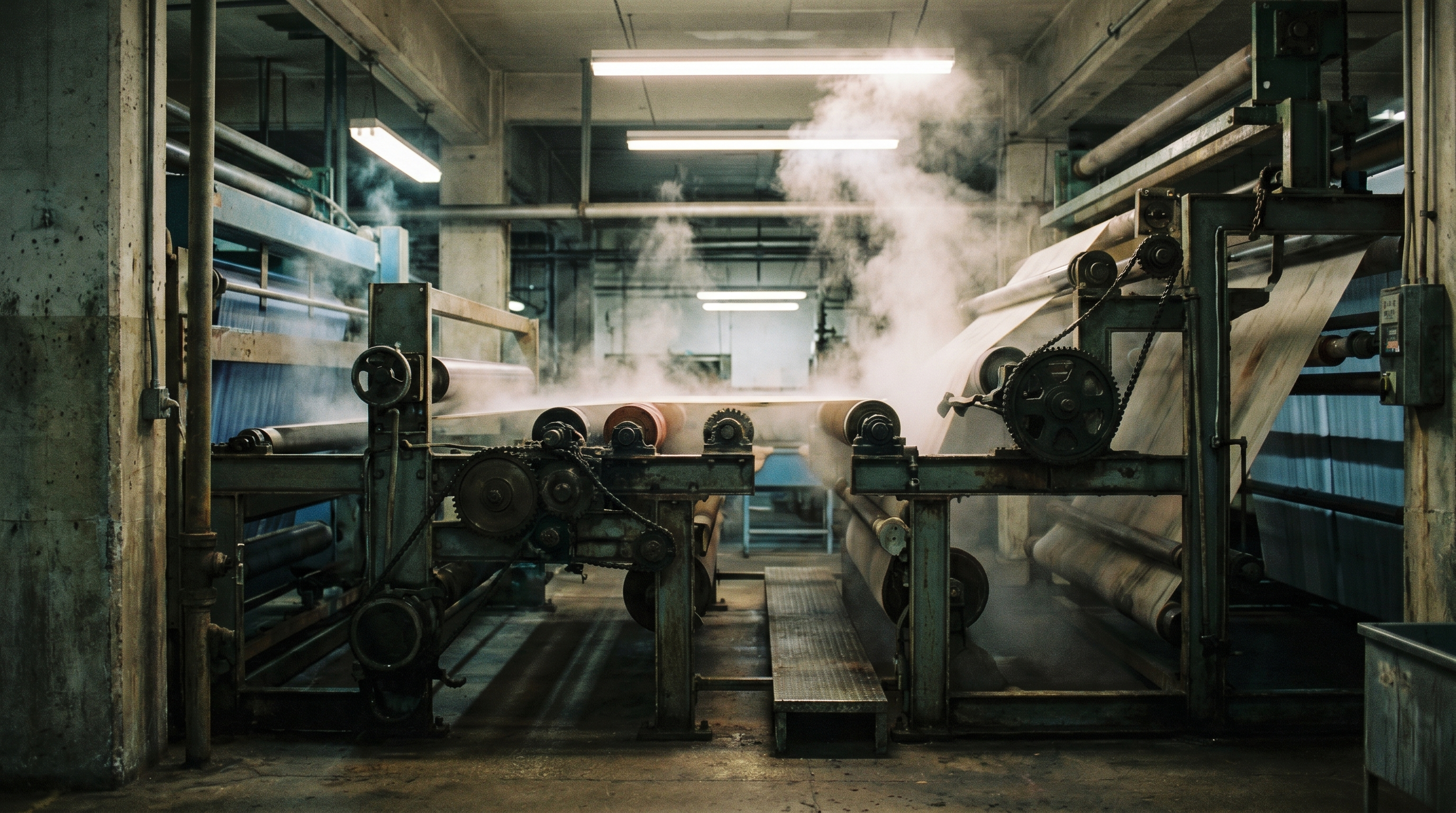
I have stood in finishing rooms where the OEKO-TEX certificate hung on the office wall while the stenter behind me was running a formaldehyde resin bath at 170°C. The certificate was real. The bath was real. Both things were true at once. If you are building a non-toxic activewear line and plan to lean on OEKO-TEX 100 as your credibility anchor, you need to understand exactly what that label guarantees and where the gaps are.
This is not a takedown. OEKO-TEX 100 is one of the more rigorous chemical safety certifications in the textile world. But the claims some brands make around it, and the assumptions consumers draw from it, often extend well past the actual scope of the test. Here is what I have seen.
What the marketing page says
The pitch is familiar by now: "OEKO-TEX 100 certified, tested for harmful substances, safe for direct skin contact." Some brands push further: "non-toxic," "chemical-free," "safe for sensitive skin." One recent guide calls it "the most comprehensive certification specifically for chemical safety in finished textiles."
That claim is defensible. But "comprehensive" and "complete" are not the same thing.
What actually happens on the line
OEKO-TEX Standard 100 is an output control standard. It tests the finished garment: the fabric, the thread, the zipper pull, the hangtag. OEKO-TEX Standard 100 verifies that "every thread, button, and accessory, has been tested against over 1,000 harmful substances and found to be safe for human health." That is the scope. The test catches what is still in the garment after manufacturing. It does not regulate what happened in the factory during manufacturing.
Here is how I have seen that play out:
- A dye house running a formaldehyde-based wrinkle-resistance finish (DMDHEU is the standard chemistry) can cure the fabric, wash it down, and ship goods that test below the OEKO-TEX limit. The residue is gone. The chemistry was still used.
- "OEKO-TEX does NOT audit the supply chain. It tests the finished product only, not the facilities that made it."
- "Standard 100 by OEKO-TEX® focuses on the final product, not the manufacturing process. So, it won't tell you if the factory polluted a river while making a product, only that the item is safe for you to use. Also, it doesn't cover the environmental impact of synthetic materials like polyester."
- "OEKO-TEX® Standard 100 tests for harmful substances in the finished product, but it doesn't require organic farming or audit labor conditions."
None of this makes OEKO-TEX 100 a bad standard. It just makes it a narrow one. If you understand its lane, you can use it correctly.
The trade-off, named honestly
OEKO-TEX 100 answers one question well: "Is this finished garment likely to harm the person wearing it?"
It does not answer:
1. How was this garment made? The environmental footprint of the finishing process, the wastewater, the energy penalty of high-temperature curing, the labor conditions on the line: none of that is audited under Standard 100.
2. What finishes were applied and washed off? A fabric can be treated with fluorine-based water repellents, antimicrobial silver, or formaldehyde resins, then washed aggressively enough to bring residue below the limit. The residue is gone. The chemistry was still used.
3. What is the environmental fate of the materials? "OEKO-TEX® doesn't test for fiber shedding, which means it has zero say in whether your clothing pollutes waterways or your skin with synthetic particles." A recycled-polyester legging certified to OEKO-TEX 100 still sheds microplastics in the wash. The cert does not address that.
If you are a brand founder reading this and thinking, "But I want all of that covered," you are describing a different certification: MADE IN GREEN by OEKO-TEX, which layers Standard 100's product testing with STeP facility audits. MADE IN GREEN "goes beyond testing for harmful substances to address broader sustainability concerns. Products with this certification are not only safe for human use but are also manufactured in environmentally friendly facilities with safe and socially responsible working conditions." That is a heavier lift. Most brands do not have it.
The formaldehyde example
Formaldehyde is useful for illustrating the gap. "Formaldehyde-based resins became widely used as a means to attain low-cost wrinkle resistance. There was a detriment though: Because of the instability of formaldehyde resins, not only was the fabric weakened but it attained a yellow hue when exposed to chlorines."
OEKO-TEX 100 sets limit values for formaldehyde in finished products, differentiated by product class:
- "In general, less than 30 parts per million (ppm) is the standard for babies, toddlers, and people with sensitive skin; less than 100 ppm for clothing that touches the skin; and less than 300 ppm for outerwear."
A non-iron cotton shirt can be finished with DMDHEU, cured at high heat, washed, and land at 35 ppm. It passes Class II. But the factory workers stood over that curing line. The formaldehyde was volatilized in the plant. The wastewater carried the unreacted chemistry out. None of that shows up on the hangtag.
What a brand founder can do about it
If you are sourcing non-toxic activewear and want to go beyond what OEKO-TEX 100 alone guarantees, here is the practical list:
1. Know which product class your supplier is certifying to
"Limit values are assigned by product class, the stricter requirements apply to Class I (babies and children under 3), because infant skin is thinner, more permeable, and more vulnerable than adult skin."
Activewear worn against the skin should be Class II at minimum. Some brands, like Tripulse, certify to Class I (baby-safe thresholds) even for adult product. Tripulse's "OEKO-TEX certification is Class 1, the highest tier, rated safe for infant skin contact." That is a harder spec to hit.
2. Ask for the restricted substance list (RSL) from your supplier, not just the certificate
The certificate tells you the product passed. The RSL tells you what was tested. If your supplier cannot produce the RSL breakdown by lot, they are likely relying on a component-level cert from their upstream mill and hoping it carries through. "Provided that the preliminary certificates (base certificates) are valid and their content is appropriate, components that have already been certified can be recognised in subsequent production stages for OEKO-TEX® STANDARD 100 certification. This modular principle allows the costs of certification to be spread across the individual processing stages, thereby reducing the scope of testing." That is legal under OEKO-TEX's modular system, but it is not the same as testing your finished goods.
3. Specify which finishes you do not want applied, regardless of residue
OEKO-TEX 100 allows formaldehyde-based finishes if the residue is below limit. If you do not want formaldehyde chemistry in your supply chain at all, you need to write that into your spec sheet separately. The same goes for fluorine-based DWR (water repellent) treatments, antimicrobial silver, and other finishes that can wash below detection.
"If your fabrics have undergone a fluorine-containing water-repellent finish, even if you used a C6 water-repellent agent (generally considered safer than C8), they may still exceed the new limit values. Many dyeing and finishing plants currently still utilize fluorine-based solutions; after June 1st, fabrics produced using these methods may fail to pass certification entirely." The spec is tightening. But the factory still makes the call on what chemistry to run unless you tell them otherwise.
4. Ask whether the cert covers the full product or just components
A legging can have OEKO-TEX certified fabric but uncertified elastic waistbands or screen-printed logos. Those components may carry plasticizers (phthalates) or bisphenols. "The testing is particularly thorough because it examines every component of a textile product, not just the main fabric, but also threads, buttons, zippers, and any other materials used in construction." But that thoroughness only applies if the brand submitted the full finished product for testing, not just the base fabric.
5. Layer certifications where you can
"OEKO-TEX® and organic certifications cover different stages of textile production so neither is better than the other. And if you are wondering which one to choose, ideally, the answer is BOTH."
OEKO-TEX 100 handles output safety. GOTS or OCS handle input fiber standards. bluesign handles chemical management in the supply chain. MADE IN GREEN handles facility audits. No single cert covers everything. If your marketing says "certified safe," you should be able to explain which part of the value chain each cert actually audits.
What I would want to see in a supplier's lab report
If I were reviewing a dye house for a non-toxic activewear line, here is what I would ask for beyond the OEKO-TEX certificate:
- Lot-level test reports, not just the annual certificate. "The STANDARD 100 certificate is valid for 1 year." But production varies lot to lot. If your supplier is not testing production lots, they are certifying a snapshot.
- The finish recipe for the specific SKU. What softener chemistry? What anti-pilling treatment? What moisture-management finish? If they cannot tell you, they are outsourcing finishing and hoping it lands clean.
- Confirmation that no formaldehyde-donor resins were used. Not "residue below limit." Not "low-formaldehyde." Confirmation of zero-add chemistry. "Traditional anti-wrinkle finishing agents suffer from issues like formaldehyde release and performance imbalance. This paper reviews the advances in anti-wrinkle finishing of cotton and silk fabrics, analyzing from the perspectives of environmentally friendly finishing agents." Alternatives exist. Your supplier should know them.
- Total fluorine test results if any water-repellent finish was applied. "The limit value for PFOS (Perfluorooctanesulfonic acid) has been slashed directly to 1 mg/kg; this applies to both the STANDARD 100 and ORGANIC COTTON certification systems." Ask for the TF (total fluorine) test, not just the individual PFAS compound list.
- Wastewater discharge reports from the facility, if available. This is outside OEKO-TEX 100's scope, but it tells you whether the factory is actually managing the chemistry it uses or just rinsing it into the drain.
If your supplier pushes back on any of these requests, that tells you something.
The honest answer
OEKO-TEX 100 is a real certification. It does what it says it does: it tests the finished product for residues of restricted substances and confirms they fall below science-based limit values. That is valuable. For a consumer buying off a rack, it is one of the better signals that the garment is unlikely to cause a skin reaction or carry high levels of known hazardous chemicals.
But it is not a sustainability certification. It is not a process audit. It does not tell you what chemistry was used in the factory, only what chemistry is still in the garment. And it does not cover microplastic shedding, end-of-life biodegradability, or the environmental impact of the fiber itself.
If you are building a brand in the non-toxic activewear space, read the plastic-free activewear guide for the full fiber and finish picture. OEKO-TEX 100 is a useful floor, not a ceiling. The brands getting this right are the ones that treat it as the starting line, then build the rest of the spec on top.
OHZEHN-TEX™ helps brands navigate exactly this kind of specification gap, but that is a conversation for another post.
The line lead's job is to hit the date. The chemist's job is to hit the spec. When those two conflict, documentation is what gets skipped first. The certificate stays on the wall. The question is what happened between the brief and the ship.
Sources
https://www.oeko-tex.com/en/our-standards/oeko-tex-standard-100 https://www.hohenstein.com/en/oeko-tex/output-control/standard-100 https://www.qforquinn.com/blogs/news/what-is-oeko-tex-certified https://www.testextextile.com/oeko-tex-2026-new-regulations-take-effect-in-june-fail-to-clarify-these-5-changes-and-your-certification-could-be-instantly-invalidated/ https://hypeach.com/blogs/news/what-is-oeko-tex-standard-100 https://www.hmpgloballearningnetwork.com/site/thederm/article/8717 https://study.com/academy/lesson/formaldehyde-in-clothing-use-limits-testing.html https://www.ncbi.nlm.nih.gov/pmc/articles/PMC12899052/ https://thehive.health/what-is-oeko-tex/ https://theroundup.org/what-is-oeko-tex-and-does-it-really-matter/ https://everyrep.com/best-non-toxic-activewear-brands/ https://hemptique.com/pages/oeko-tex-vs-gots-certification https://orezon.co/blogs/bedding-materials/gots-vs-oeko-tex-vs-fair-trade https://www.selflessclothes.com/blog/what-is-oeko-tex-certified/